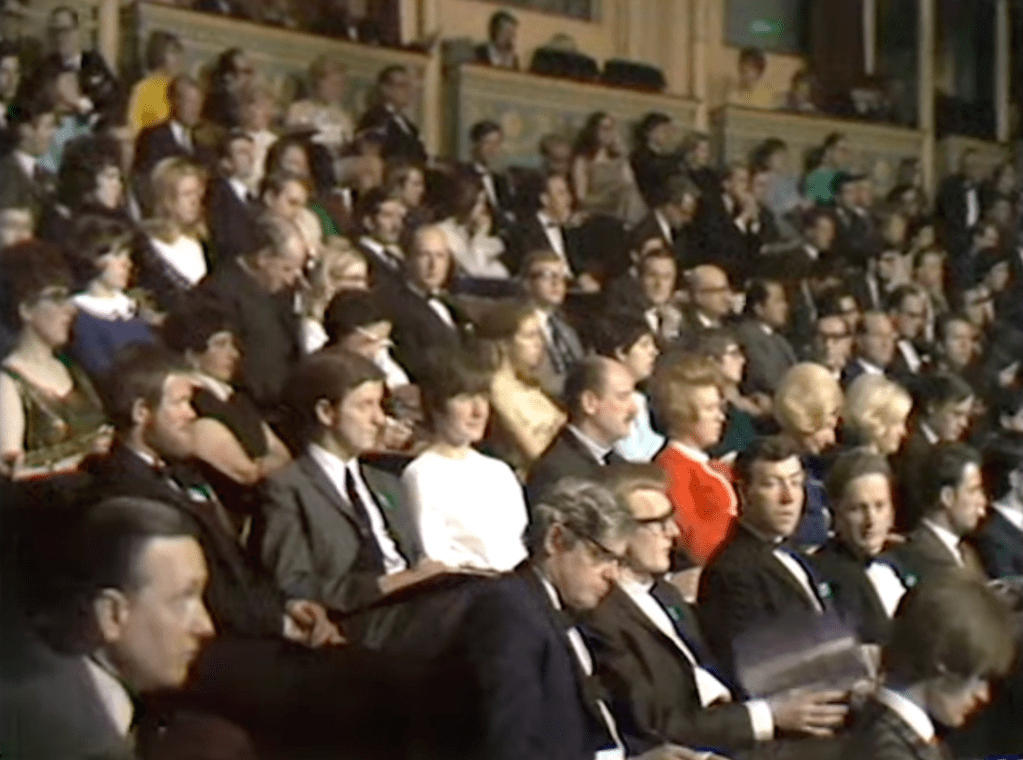
The audience for the 1968 Eurovision Song Contest at the Royal Albert Hall, London
There can’t be many people left alive who remember the very early years of the Eurovision Song Contest.
There are probably fewer people alive who’d choose to remember those years, even if prompted. But frankly, who can blame them? It’s a period in the life of the contest that is not particularly revered. Popular histories of the event and compilation albums of Eurovision hits often hurry through the 1950s and 1960s before arriving, relieved, in the 1970s when everything was in colour and groups were allowed and Abba won.
What happened before the 1970s tends to be whispered about rather than celebrated loudly. It’s treated as an awkward prelude to the main action, one that is grudgingly acknowledged whenever a notable birthday comes around, such as the contest’s 70th anniversary in 2026.
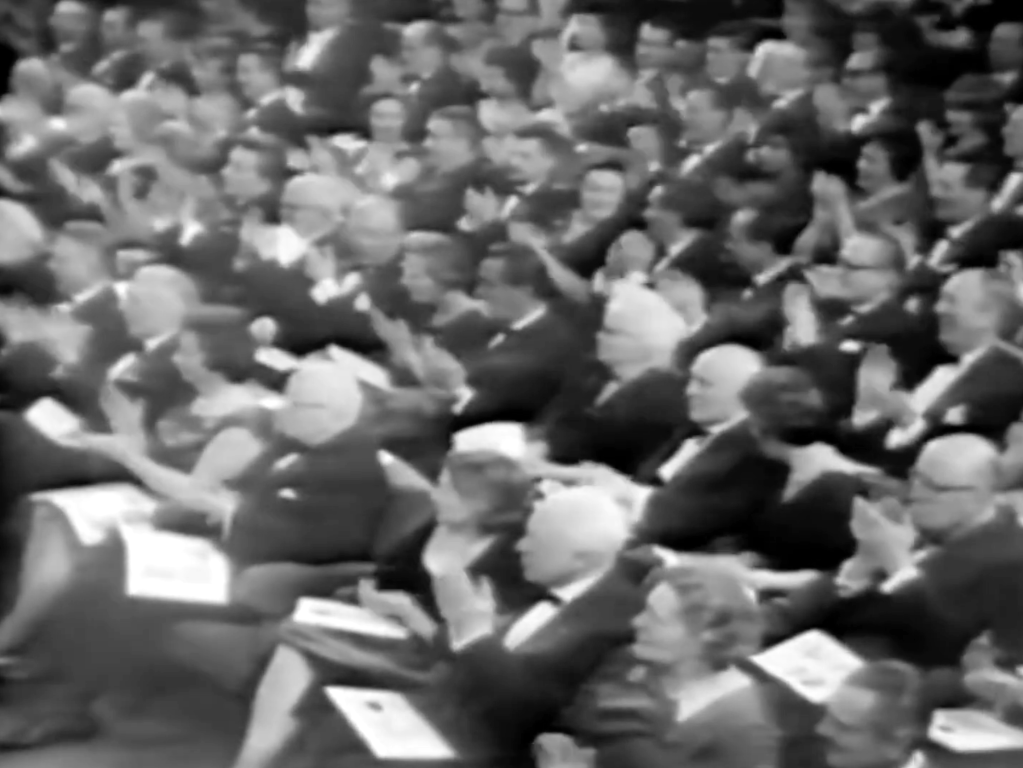
The audience for the 1962 Eurovision Song Contest at the Villa Louvigny, Luxembourg
When footage is shown of those early days, it feels older than it actually is. The clips do not chime with what we have come to expect of popular music of the 1950s and 60s. Even the audience seem to belong to a previous, almost pre-war era. It’s hard to reconcile what we’re seeing and hearing with the sights and sounds that prevail in dominant narratives of those years.
It’s harder still to reconcile the formality of the contest then with what it is like now. There doesn’t seem to be any through-line from the tiered rows of restrained elderly attendees in black tie and huge frocks to the thousands of enthused fans of all ages that throng the floor of today’s multi-media jamborees.
The first contests were essentially recitals in concert halls. The footage that survives of these events does not make them look exciting or commend them to be recalled. The early years of Eurovision did not carry the air of something self-evidently worth remembering or celebrating long into the future.
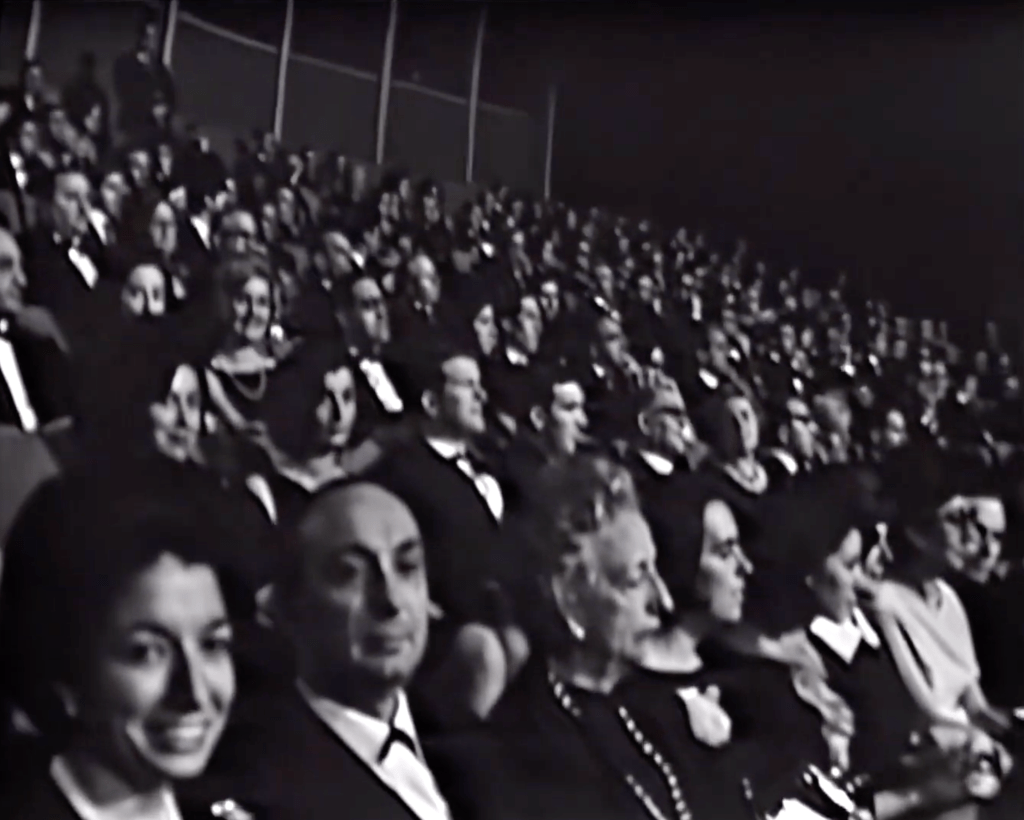
The audience for the 1965 Eurovision Song Contest at the RAI Sala di Concerto in Naples
Some of the songs from those early years are worth remembering, though. They have a quality and a charm that transcends all the factors that work against the memorialisation of the period and which keeps them sounding fresh and exciting even today. They are also songs that succeed on their own terms. They are robust enough to flourish in the wider world, not simply under the protective glass of the Eurovision greenhouse.
Yes, they can sound of their time musically and lyrically, but they don’t belong just in their time. They have qualities – inspired, eccentric, audacious, moving qualities – that help them endure and appeal far into the future; indeed, which make them far more enduring and appealing than many of the songs in subsequent decades, including those of the present day, which often struggle to sound fresh and exciting on the night of their performance.
A few years ago I listened to every entry in the history of the Eurovision Song Contest: a project undertaken chiefly for work reasons, but also out of curiosity. What songs from those far-off dinner-suited days would catch my ear enough to merit a second listen?
As I ticked off each contest – a task that took several months – I made a note of my favourites. Here are eight entries from the 1950s and 1960s that I’d rate as the best. None of them won the contest. Most of them aren’t in the English language. But all stand in a class of their own, not only as the cream of the Eurovision crop, but also as fine songs of this or any era.
Telefon, Telefon – Margot Hielscher (West Germany, 1957)
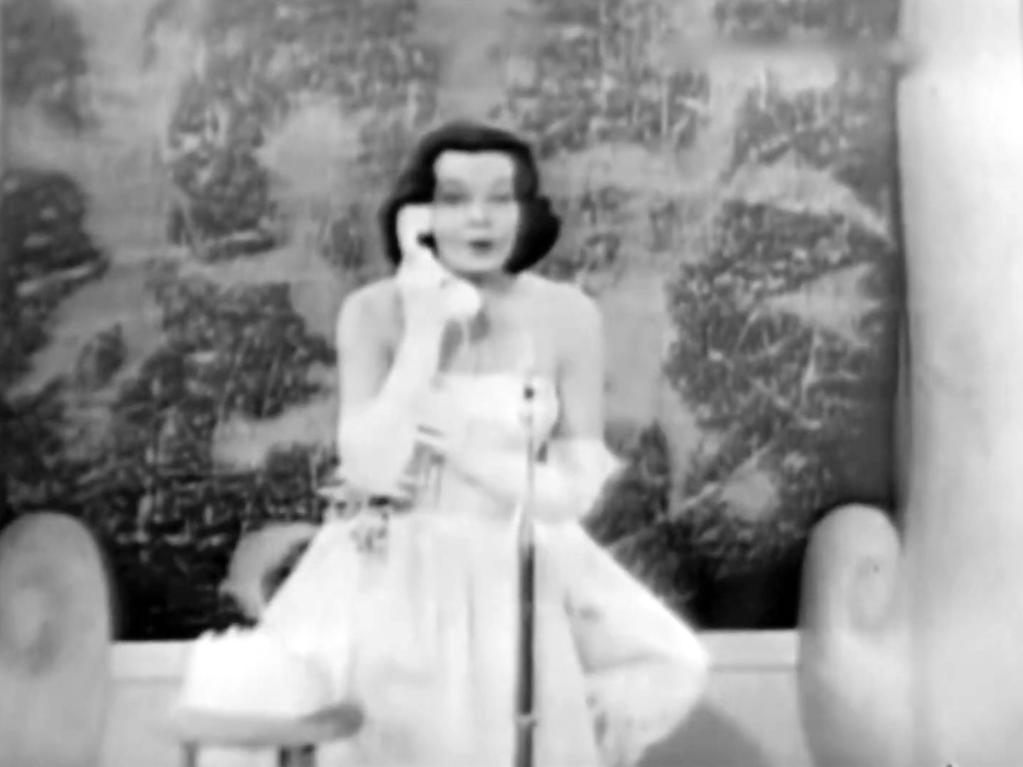
Margot Hielscher was already a well-known singer and actress in West Germany when she took to the stage in Frankfurt to deliver the most enchanting Eurovision song of the 1950s.
She draws on this long experience as a performer, particularly in front of a camera, to produce a totally convincing and highly television-savvy rendition of what, in other hands, could have ended up a flippant novelty number. For besides being the sweetest entry from the contest’s infancy, Telefon Telefon is also the most daring.
The entire song is performed as if on the telephone, with Hielscher fielding a series of calls, possibly from the same person, possibly from a range of callers, as if helming a switchboard for the lovelorn or a telethon for lonely hearts. Hielscher walks on, settles herself next to a handset, which promptly rings – and she picks it up. Her first words are spoken – “Hello, how do you do? Hello? Merci beaucoup!” – before she slips effortlessly into a mid-tempo ballad with a gentle, major-key melody. The tune follows the contours of conversational speech, allowing her to switch easily between speaking and singing for the next few minutes, but always retaining a soft, consoling tone.
This may have seemed rather startling to audiences in 1957, perhaps even unsettling. For one thing, she’s got a private telephone all to herself: a luxury not yet in everyone’s reach, but one with which Hielscher seems well acquainted. Then there’s the matter of just who keeps calling her. It is a friend? A lover? Several lovers? Whoever is on the end of the line, she has to keep switching languages (which she does with admirable ease) and they are very persistent.
English, French, German, Italian… Hielscher is a one-woman trans-continental telephone exchange. Yet she performs the song tastefully: she never bellows or over-emotes. Here is where her skills as a screen actress particularly shine through. She knows when to go big or when to rein things in for the camera, aware that sometimes the smallest movement or inflection commands more impact on television than an over-the-top gesture. She also knows this is as much a piece of drama as a song, which requires as great a sense of timing as one of pitch. Naturally, she excels in both.


Occasionally her voice drops almost to a murmur, which is fitting as she is meant to be directing it mostly into the phone. But she never loses touch with the song’s melodic heart: a lilting chorus, evocative of a music-hall serenade or something from a light opera, with an emotional resonance even if you don’t understand all the words (“Telefon, telefon, lang war ich allein” – “Telephone, telephone, I was alone for a long time”).
The arrangement is spot on: a simple piano and guitar accompaniment that alternates with orchestral passages scored for delicate strings and an occasionally mournful oboe. Halfway through, the song shifts briefly into something close to a blues, as if we’ve momentarily wandered into a bar with a double bass and drum kit nearby. By the end, she seems spent: her voice falls close to a whisper, the music dies away, and she hangs up the phone one last time.
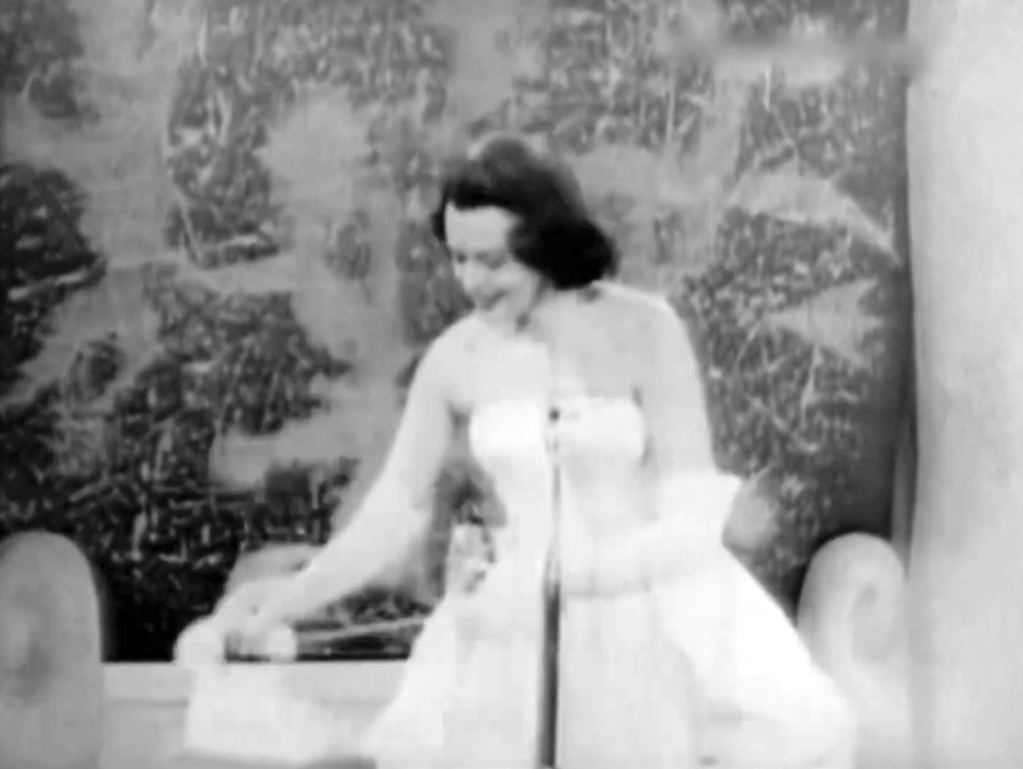
A translation of the lyrics suggests the song is being performed as much to the telephone as it is to the callers, who may or not be a figment of her imagination. It’s a tantalising idea: maybe she is in thrall not to people on the end of the line, but to the device itself, with its promise of love and companionship. “I’ve been alone for a long time… when will I be rewarded with happiness?” She signs off as much to the audience – to us – as to her telephone, announcing her song is ended: “Mein lied ist aus, au revoir.”
Hielscher finished the contest in joint fourth place out of 10 entries. This seems particularly undeserved given the small field and the largely bland, forgettable offerings from most of the other contestants. Perhaps the sight of someone singing into and at a piece of household furniture was too bold for the juries. She tried again the following year, only to do even worse, and with an inferior song, ending up in seventh place out of 10. As a consolation, hopefully she got to keep the telephone.
Are You Sure? – The Allisons (UK, 1961)
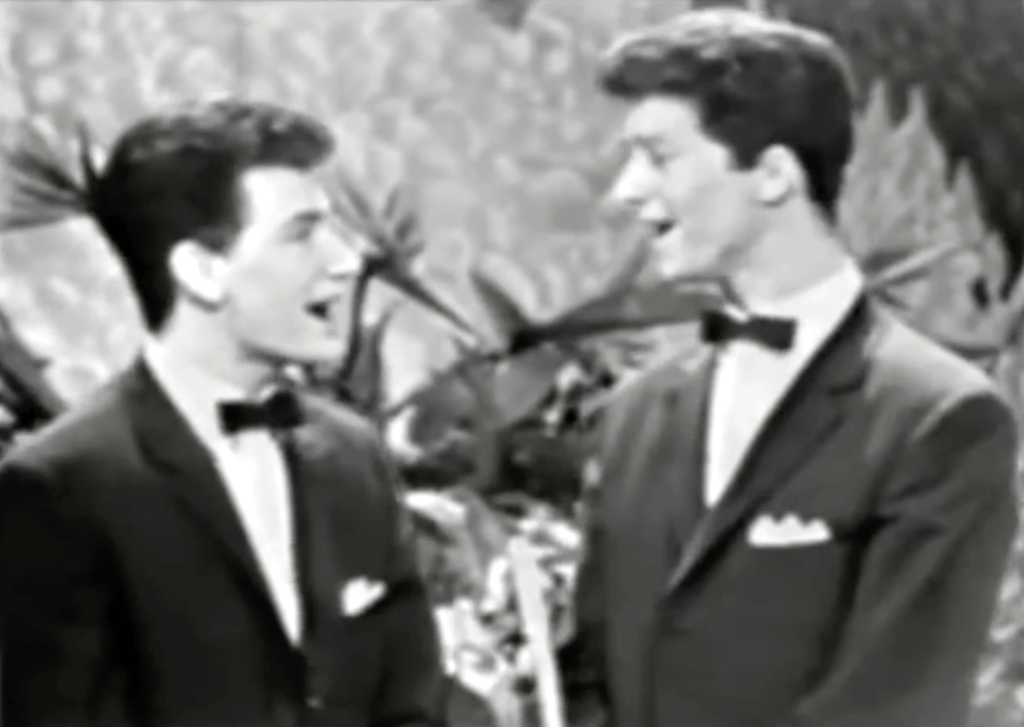
The Allisons were neither related to each other nor called Allison, but together they wrote and performed without a doubt the best song the UK entered in the contest in the whole of the 1950s and 1960s.
Here is a rare example of Britain outpacing its continental rivals with a positive and constructive response to what was going on elsewhere in pop music – specifically, in the United States, in the guise of male vocal duos, the most compelling of whom were the Everly Brothers. Hence the Allisons were presented in 1961 as brothers, even though they weren’t, and marketed at home and abroad as Europe’s own Everlys, even though they weren’t quite in the same league.
But they did possess a similar flair for close harmonies and for playing off each other’s high/low registers through call-and-response lyrics and pitch-perfect phrases. Are You Sure? is not simply an attempt to copy someone else. It is a fine number in its own right and stands even today as one of the best UK efforts from the post rock-and-roll, pre-Merseybeat era. Like other strong singles released by vocal duos in the early 60s, whether from the UK or the US, the song is of its time but not shackled by its time. It is full of freshness and vitality that resonates decades later.
Bob Day and John Alford – for those were their real names – wrote the song as well as performing it, and their strengths in both fields are bolstered by a chirpy instrumental accompaniment, full of bustling string passages including some distinctive two-note flourishes that help drive things along. You can hear the influence of John Barry’s work for Adam Faith, particularly in the scurrying violins. The main backing is provided by piano, bass and drums (played with brushes), with no guitars. It’s sparse and economical, almost jazz-meets-skiffle, but does much to foreground the vocals and the infectious tune.
Lyrically we’re in stoical suburbia: sadness with a brave face, which makes it all the sadder. Some of the lines are really quite bleak: “You will see as time goes by, we’ll grow lonely, you and I, dreaming of each other and we’ll cry.” The tone is one of potential futures, not of shared pasts. There are hints of betrayal: “You’re the one that went and broke the vow”. The protagonist(s) seem as unsure of the situation as the person to whom the song is directed, concluding at one point, “What is there to live for?” then at another point, “It’s hard, but I’ll pull through.”
The song is full of room for interpretation, which is another of its strengths. It could be heard as a dialogue between the two singers themselves, or a joint plea to someone else, or the two singers working through their respective relationships with the third party. It ends in the same mood of irresolution as it began, with they – and us – left wondering what could happen next.
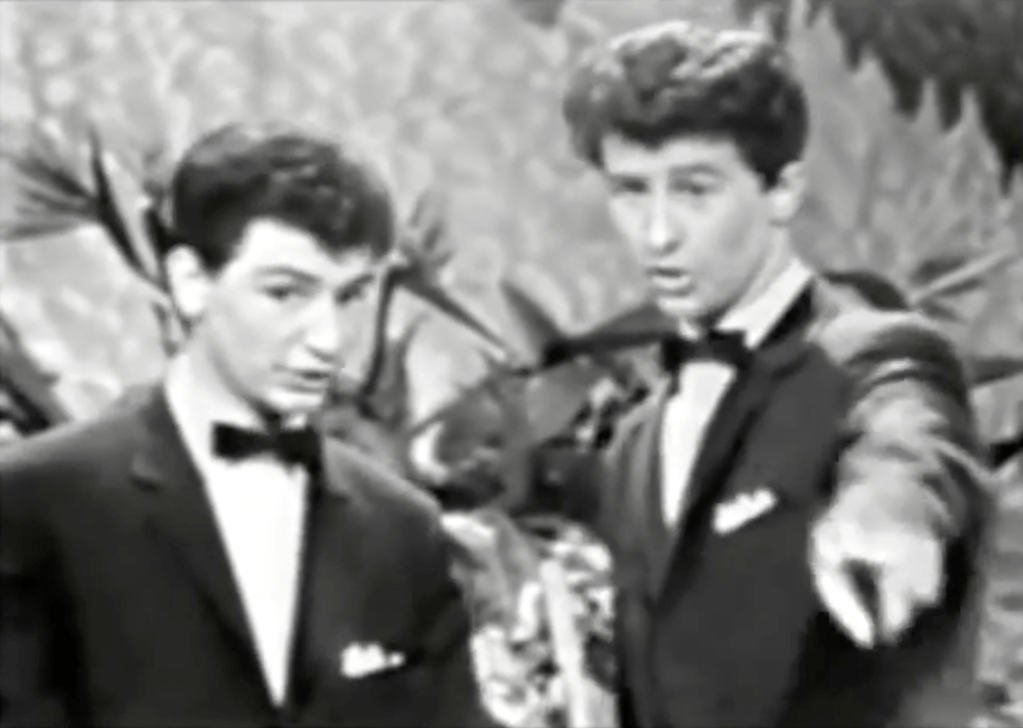
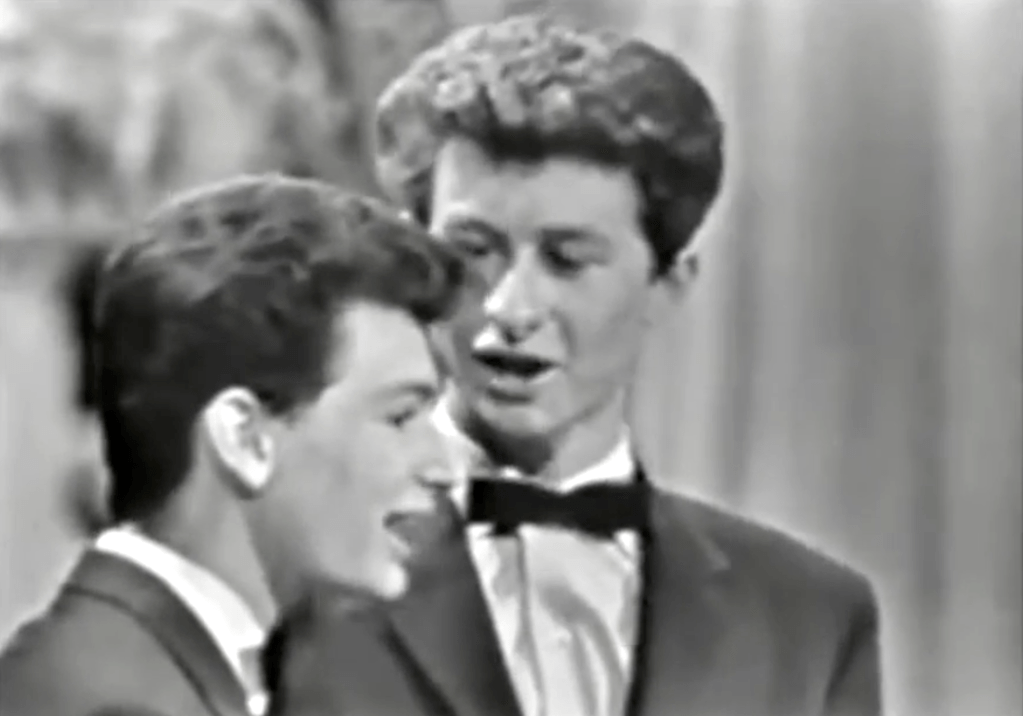
The fact all of this is sung to a jaunty beat, in a resolutely major key, doesn’t dilute its impact; rather, it makes the lyrics somehow more affecting. When you watch the pair’s performance, they seem very nervous at the start, but relax as the song goes on and start smiling halfway through. One of them even attempts a finger-pointing gesture on the accusatory line, “You’ll be sorry”. They are done no favours by the staging, however, with the scenery more suited to a dressmakers’ boutique than a contemporary song recital, leaving them looking – as well as sounding – a decade ahead of everyone in taste.
The Allisons had already enjoyed a huge hit in the UK with Are You Sure? before the contest even took place. The song reached number two in the official singles chart the week before the final (though it went to number one in the NME’s chart), going on to enjoy six weeks in the number two position, kept off the top spot first by – ironically – The Everly Brothers with the gorgeous Walk Right Back, then by Elvis Presley with the insipid Wooden Heart. Getting stuck in second place was a fate that awaited them in the contest as well. The pair finished as runners-up to Luxembourg’s Jean-Claude Pascal, making – for once – a strong one-two in the final. Success back home for the boys was then curtailed abruptly in 1963, as it was for so many others, by new sounds and faces.
Le Retour – Jean Philippe (Switzerland, 1962)
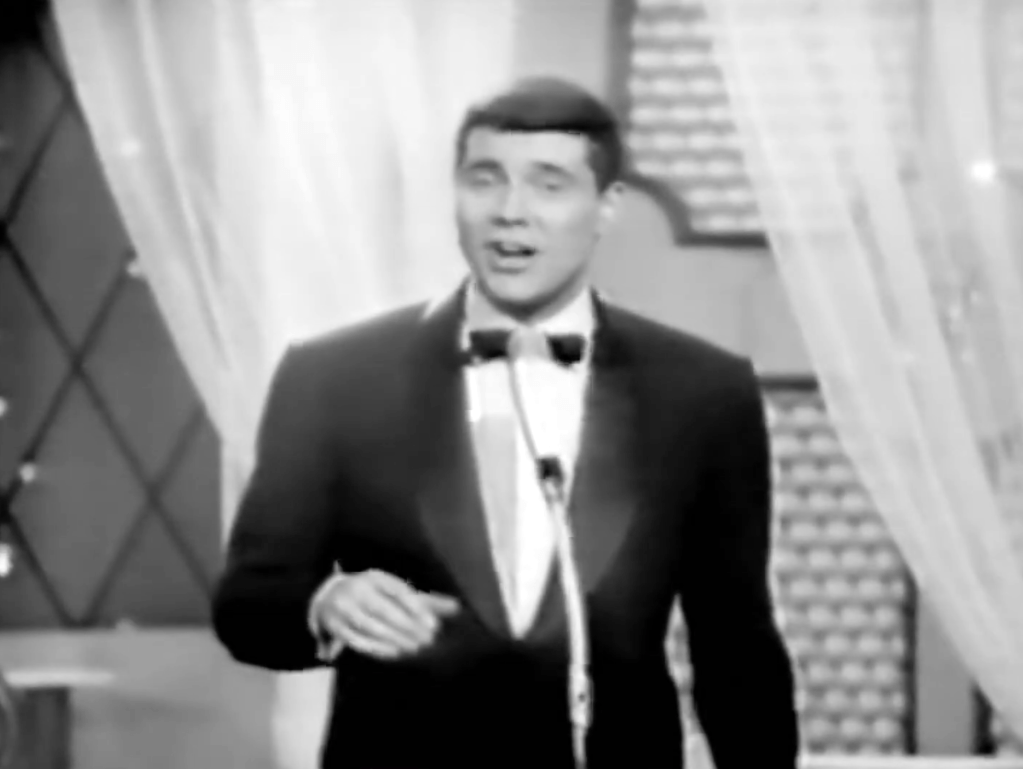
The opening seconds of this song are really too good to belong only in the Eurovision Song Contest. They would easily find a home in the cinema, at the start of a gritty Cold War thriller or espionage caper, playing under a title sequence bristling with mid-century graphic design. The big screen release of Dr No was still several months away at this point in 1962, but here is a song that would have no trouble decorating the start of any James Bond film of the decade. First come a sequence of rising string passages that foreshadow the opening bars of From Russia With Love; then a brass fanfare that does likewise for Goldfinger; then it settles into a suave, slightly menacing 6/8 rhythm that frankly could be out of any John Barry score of this era.
Next comes something that gives the song a timbre that is, at this point in Eurovision’s history, unique: a series of clipped arpeggios played on a guitar. But not any old guitar: an electric guitar. Such an instrument had rarely made an appearance in the contest by 1962, and certainly never in such a prominent role. As soon as the guitar enters, so does the song’s dominant personality: a young, urban personality, the arpeggios evoking the image of someone moping along a darkened city street, brooding, disconsolate, mysterious.
To seal the deal, Jean Philippe then strikes up the melody. He delivers its soulful, hesitant phrases in a rich tenor that oozes with equal amounts of charm and regret. He is pitch perfect and his performance, together with the French lyrics, create quite the bewitching effect. There is something about a Gallic minor-key ballad in 6/8 time, sung with sincerity and a melodic immediacy, that creates a spell on the listener, even if you haven’t the faintest idea what the words mean. It is the sound itself that conjures and sustains the magic.
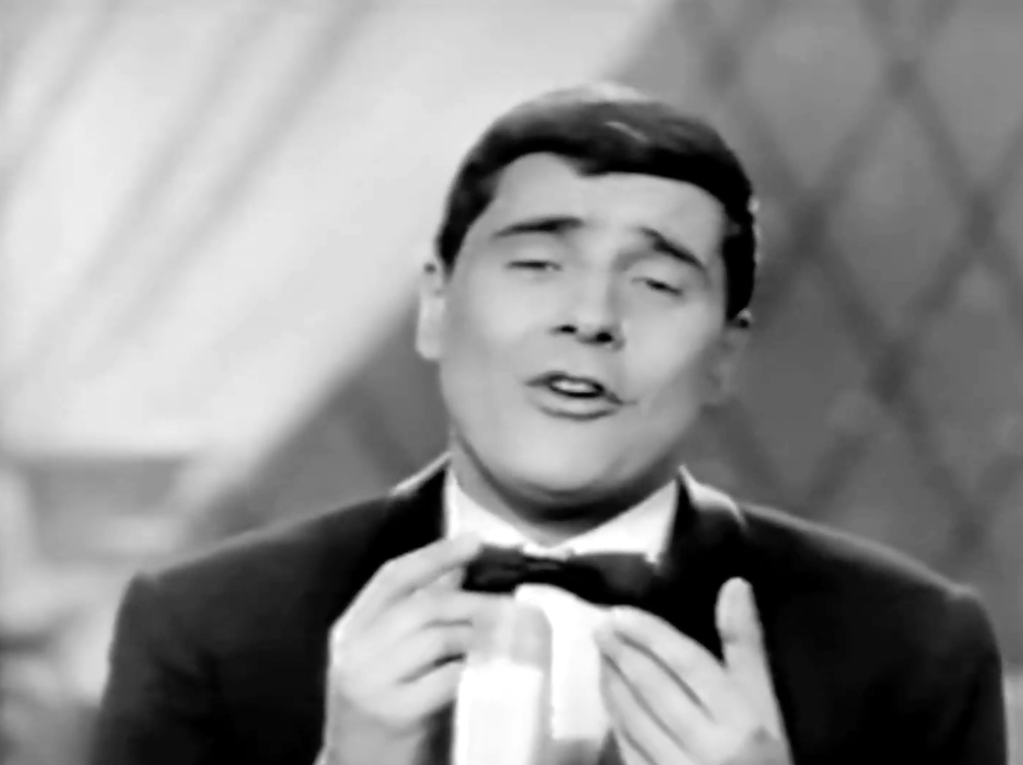
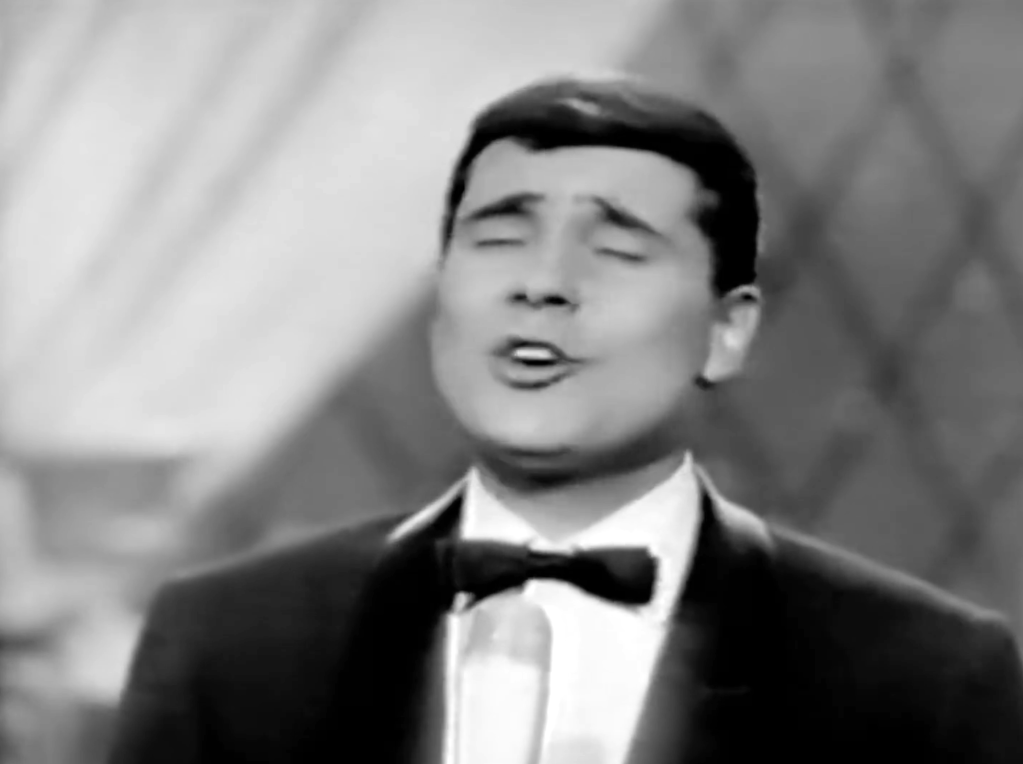
The song see-saws between its opening refrain, built on a rising chromatic sequence full of emotional charge, and a smoother middle section, where the hiccupy 6/8 rhythm becomes a steady swing beat and the arpeggios fall silent, with strings to the fore and Philippe singing in longer, lusher phrases. It ends with as much cinematic flair as it began. As Philippe suddenly jumps an octave for his final pleading phrase, and the brass stabs away repeatedly, you can picture the end of the film’s credit sequence, with the director’s name on screen then a dissolve into the first location, the atmosphere stoked with anticipation. Even the song’s title, Le Retour, is infused with a sense of an impending reckoning.
You don’t have to understand French to get the gist of what he is singing: something or someone is hoping for, or about to make, a return. The affirmation in his delivery of the final line (“Oui! Le retour des noveaux jours!”) tells us this return is going to happen, be it good or bad. “A chacun son tour, c’est le retour,” he sings: Everyone gets his turn, it’s the return.
Philippe had a number of occupations before settling on the job of full-time singer – receptionist, accountant, bartender, shop assistant – and he projects a certain world-weariness in his performance that is highly persuasive, be it affected for the occasion or reflective of his own experiences in life. This was his second appearance in the contest – the return, you might say – having previously represented France in 1959. On that occasion he finished third; here he came a bitterly unfair 10th out of 16. Once again, perhaps juries just weren’t ready for the sounds they heard – that electric guitar! – or the anti-romantic, modernist inflections in the melody and arrangement. Alternatively, perhaps they just took against someone for having a second go.
Paradies, Wo Bist Du? – Ulla Wiesner (West Germany, 1965)
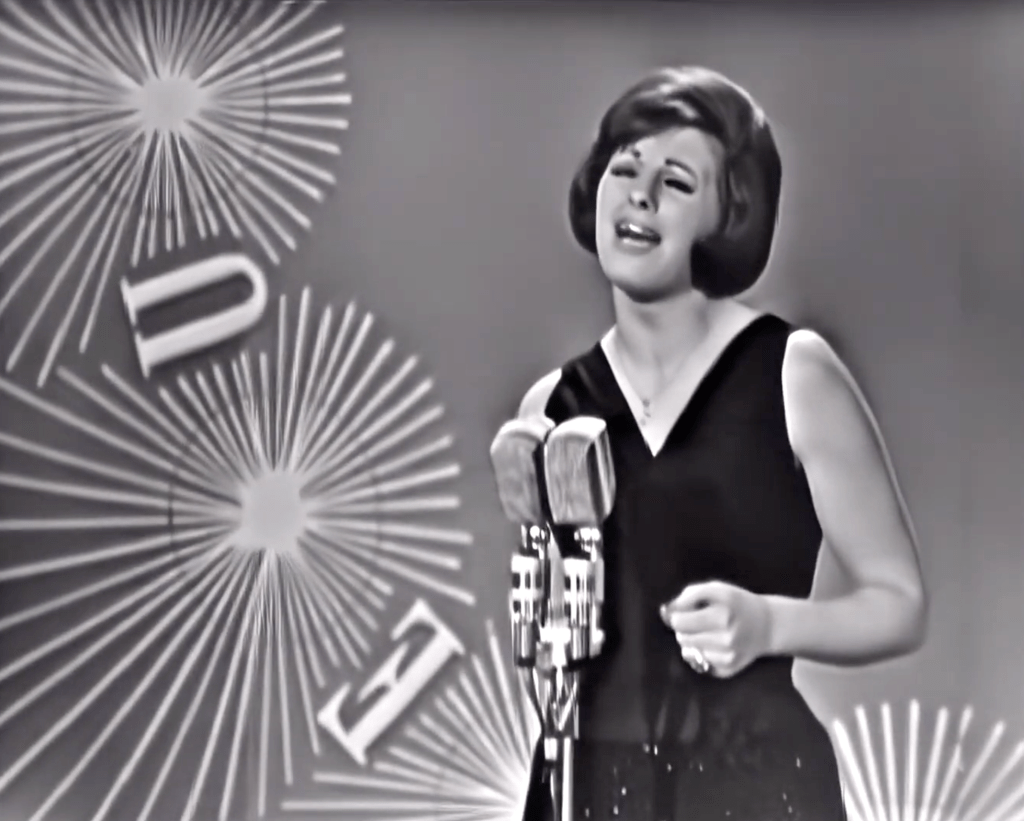
This song fizzes with excitement from the first bar. We’re pitched into a very urgent, very absorbing arrangement that bustles along like an over-stimulated bossa nova – something that probably sounded quite unusual to Eurovision connoisseurs at the time. Hindsight suggests it wasn’t that unusual, however: though the tempo is fast by the standards of the contest, the syncopated riff bears more than a passing resemblance to, yes, It’s Not Unusual by Tom Jones, which had been released only a few weeks earlier. If the similarity is more than a coincidence, that was speedy work (and a canny move) by the writers.
Compounding this opening mix of vibrant rhythms and a whiff of exoticism is a very curious, almost otherworldly wailing sound, that trills along in an extraordinarily high register before tumbling down the scale, as if falling from the sky, in time for the lead vocal to begin. Is this a person, an instrument or an electronic sound? There’s no time to ponder, however, as here is Ulla Wiesner, laying out the lyrics as if a lawyer advancing a case in short, terse statements, each verse ending with the song’s title (“Oh paradise, where are you?”).
It’s evidently not close at hand. The question never gets answered, which you grasp even if you don’t speak a word of German, thanks both to Wiesner’s restless, imploring tone and the way the song is built on a repeated descending chord sequence, driven by a motif in the strings that figuratively kicks the rest of the orchestra down a flight of steps, only for everyone to get dragged back up to the top of the stairs every time Wiesner repeats the title.
The middle section – it could be the verse, if you treat the descending sequence as the refrain – suddenly flips things round and gives us a feeling of ascent, thanks to long, sustained phrases in the melody and a more stately accompaniment from the strings, though the scurrying bossa nova rhythm is ever-present. But we never quite escape the claws of those repeated descents down the musical stairs, one of which sees Wiesner ditch the lyrics for some jazz-style scat-singing, making everything sound even more exciting and innovative. It’s quite something.
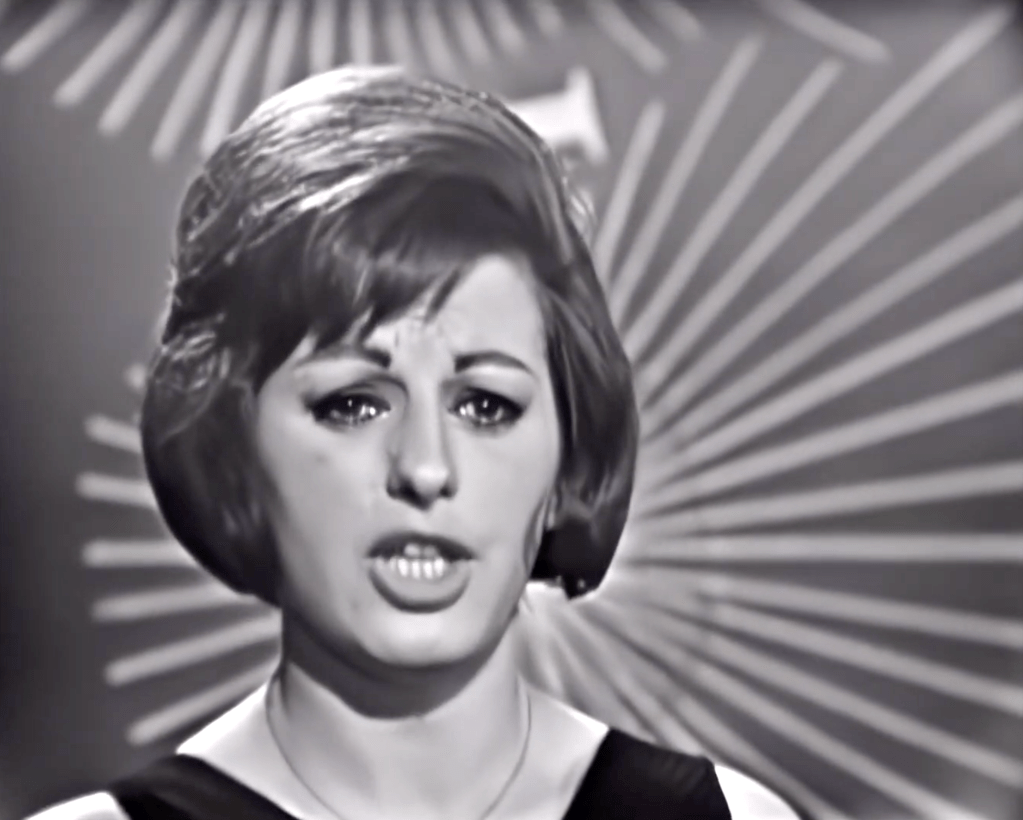
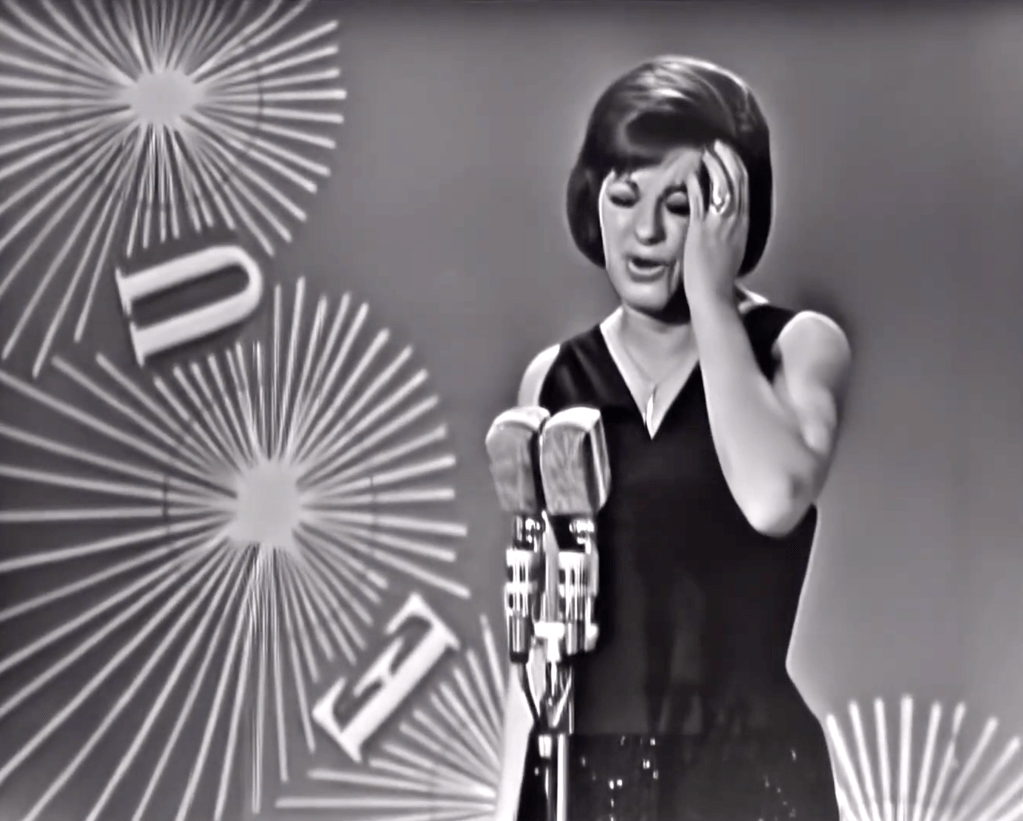
A translation of the lyrics confirms there is very little cheer to be found (“Then the day… then the light… then the slap… in the face…”), particularly in that middle section where Wiesner finds herself “so alone, standing here and crying, like a little girl lost in the city”. She ends with a coda that sends her soaring to the top of her register, repeating the question in the title one last time, leaving us in the same heightened sense of frustrated anticipation as herself – especially as the music resolves quite unexpectedly on a soft, tonic major chord: a moment which, in performance, Wiesner chooses to augment with a flamboyant gesture, holding a quivering hand to her head.
In the single greatest miscarriage of Eurovision justice of the 1960s, Wiesner ended up with precisely no points, sharing bottom place alongside far inferior efforts from Belgium and Finland. What was there not to admire about this song? Perhaps it wasn’t as easy to like or as reassuringly conventional as others that year, but just how could it have failed to pick up even a single point from one of the 17 other countries?
For Wiesner, a 24-year-old session singer at the start of her career, this must have been a brutal outcome. Admittedly she was up against the juggernauts of France Gall for Luxembourg and Kathy Kirby for the UK, who took first and second place respectively. But to miss out on even one point? Such are the objective perversities – and singular disgraces – of the contest, both of which persist to this day.
Intet Er Nytt Under Solen – Ase Kleveland (Norway, 1966)
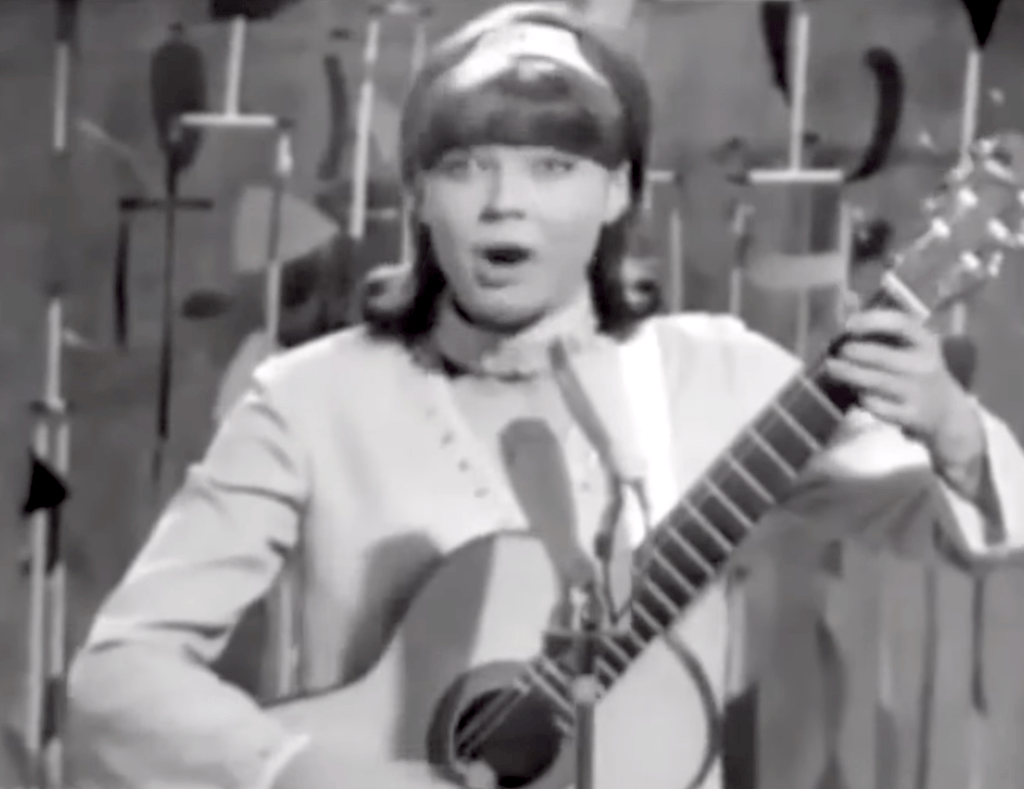
There have been only eight songs to date that have made it to the final of the contest which have not been in either common time (four beats to the bar) or triple time (three beats). This was the first, and as such made history. The time signature is 5/4: something so alien to Eurovision that the song feels as if it has fallen through a wormhole from a contest taking place in a parallel universe, such is its brazen rejection of norms and its cool, nonchalant embrace of the new.
A piece of popular music in quintuple time was not entirely uncommon by 1966, however. Dave Brubeck recorded and released Take Five back in 1959, with the track becoming a hit two years later. The opening of this song is rhythmically very similar to Brubeck’s opening piano riff, splitting each 5/4 bar into a listener-friendly group of three beats followed by a group of two (ONE-two-three/ONE-two/ONE-two-three/ONE-two), driven by a syncopated figure that is almost identical to Take Five, except here it is played on an acoustic guitar rather than a piano.
This is the first surprise in a song that delivers several, all in quick succession, all of them exciting and all carried off with aplomb. The guitar is played not by an accompanist but by the singer herself; the first four bars of the song consist of the guitar and nothing else; and when Ase Kleveland starts to sing, she does so in a very low register, her words following the same syncopated riff as her guitar. Rarely had there been – has there been – a Eurovision entry that begins so unconventionally.
Bass and percussion join the guitar soon afterwards, then strings, then a full drum kit and finally an entire orchestra, bopping and jiving in 5/4 time with exhilarating abandon. At moments it feels as if the song is about to splinter into pieces, with all sense of metre gone; other moments threaten to tip over into atonality. Some of the harmonies and chord progressions are modal, which can sound strange to Western ears used to hearing only major or minor sequences. There’s a rawness to the instrumentation and to Kleveland’s delivery that also makes the song seem at times coarse and abrasive. But it’s all performed with utmost precision and with an energy that is quite thrilling.
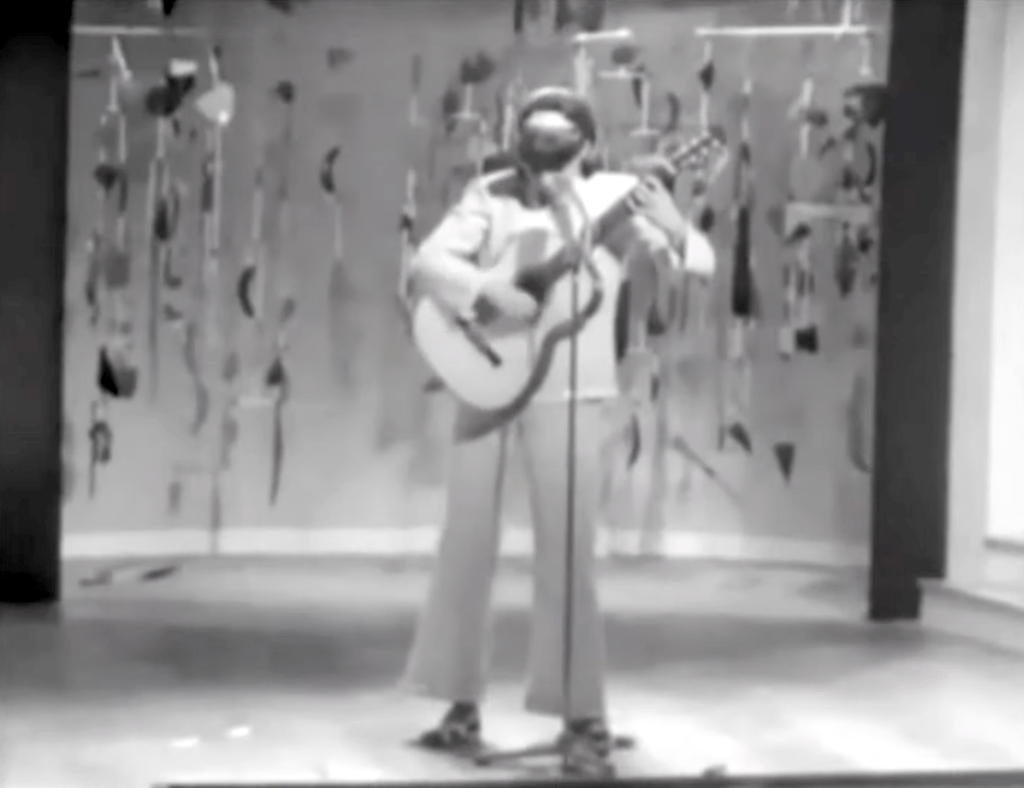
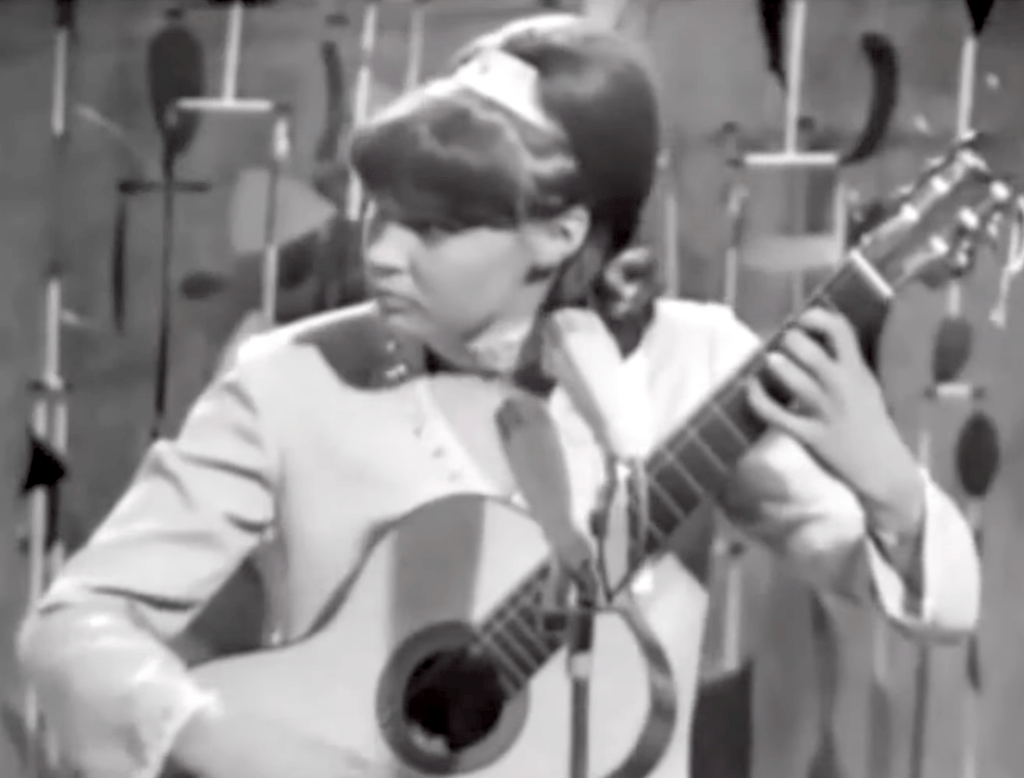
The piece is very short – it ends in less than two minutes – and comes to an abrupt, subdued halt, with no harmonic resolution, just a dangling note plucked repeatedly on the guitar (the dominant, not the tonic) and a quiet jazz-inflected augmented chord from the orchestra.
The title translates as “Nothing new under the sun”, which can’t help but feel ironic, given the newness of pretty much everything in the song. The haunting melody fits well with the similarly reflective words, which tell in concise phrases of an old man in a rocking chair with sad eyes who keeps invoking the title, to the singer’s bemusement and pain (“What do I have to wait for? Myself there in the chair?”). What a heady brew of angular rhythm, ambiguous tonality and imagist poetry.
And yet despite all of this, Kleveland finished an impressive third in the contest, only one point behind second place Sweden, though both were a fair distance behind the champions Austria. Maybe this time juries were ready for something different, that was self-consciously new and fresh – though admittedly the song’s roots in contemporary jazz placed it well outside the prevailing pop trends of the time, never mind Eurovision’s obsession with classically-influenced popular song. Perhaps it also appealed to jurors looking for something they could tell themselves was highbrow or a bit recherché. In reality the song is neither of these, being not at all contrived or snooty and, thanks to the pioneering efforts of Brubeck and co, rooted in rhythms increasingly familiar to many.
Kleveland was well known in her country by 1966 as a leading exponent of folk pop and went on to achieve much more, including becoming Norway’s minister of culture in the 1990s. Crowning even this, however, was her hosting of the song contest in 1986, the year after Norway’s first ever win. She opened proceedings by treating millions of viewers to a specially-penned song that achieved something for which Eurovision had long been waiting: putting words to the familiar opening strain of the European Broadcasting Union’s official musical motif (the Te Deum in D major by 16th century composer Marc-Antoine Charpentier): “Soon we will know who’ll be the best, in the Eurovision Song Contest!”
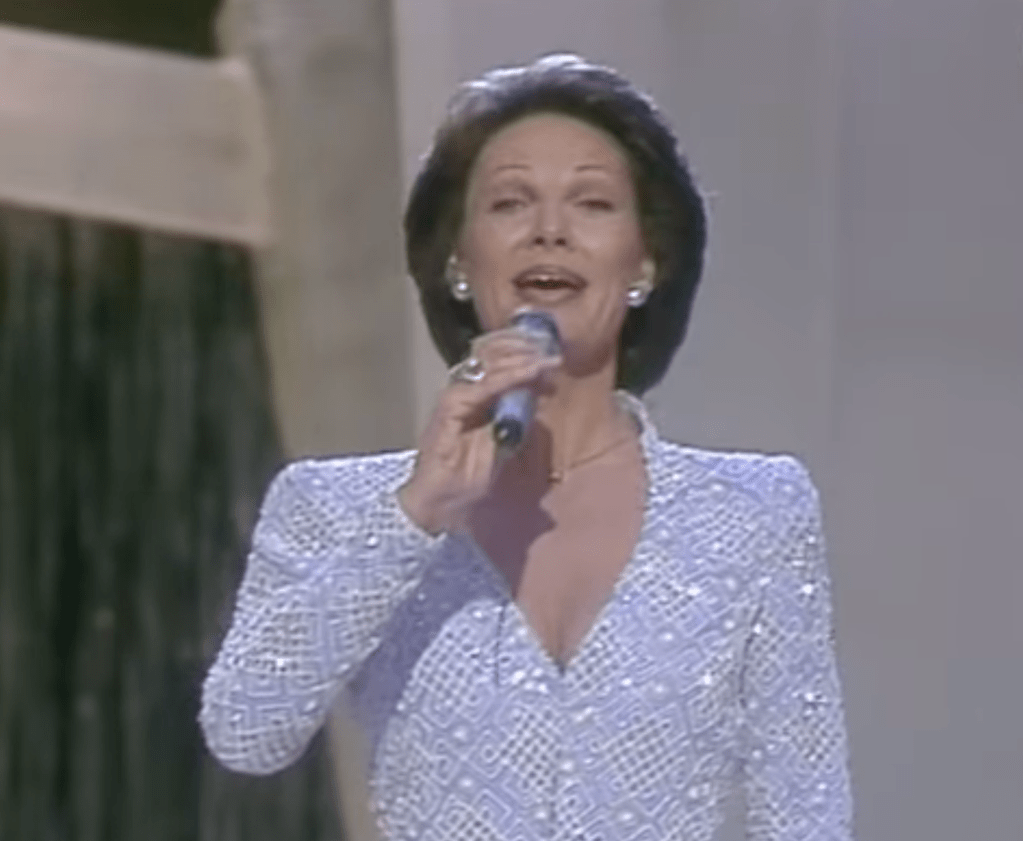
Ase Kleveland opening the 1986 Eurovision Song Contest in Bergen, Norway
Il Doit Faire Beau La-Bas – Noelle Cordier (France, 1967)
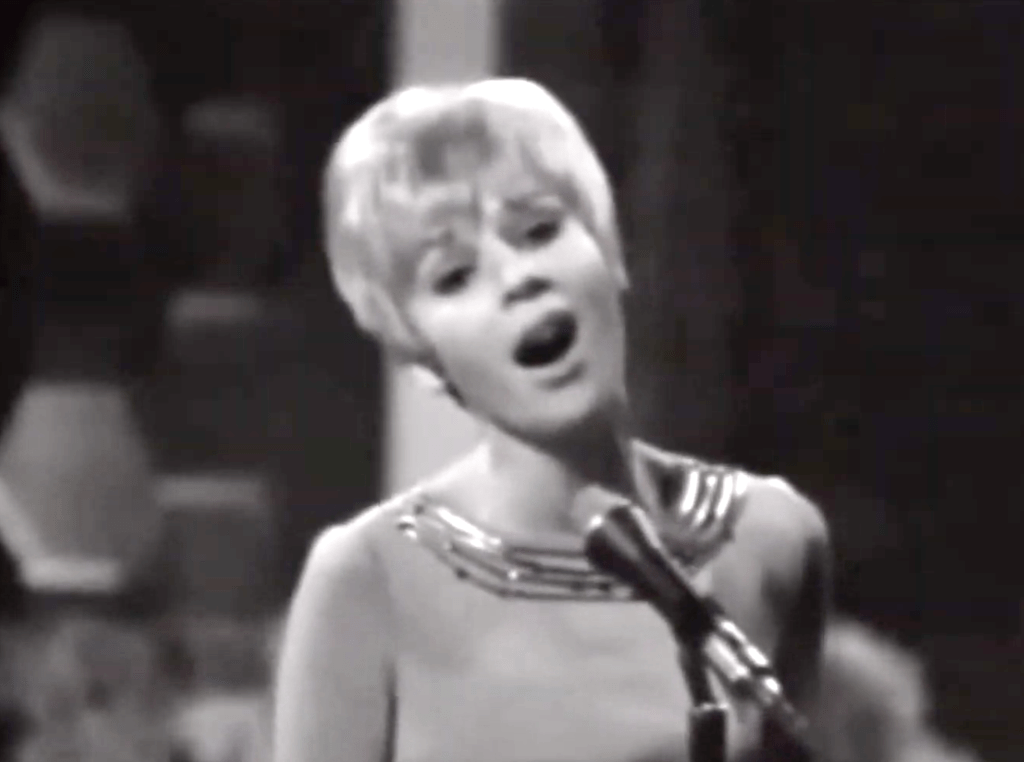
This song oozes cosmopolitan elegance from start to finish. It opens with the orchestra playing a short run of soft, rubato phrases, with violins soaring upwards until they reach a plateau of shimmering gorgeousness, at which point Noelle Cordier materialises out of the ether, her voice clear and warm and with a natural tone that is still, after so many years, rare to hear in this contest. Hers is a completely pure, unmannered voice. She isn’t forcing the notes, she doesn’t sound like she’s having to work at singing as exquisitely as this – she just, well, is what she is: a vocalist of supreme class and charm.
The rising string phrases of the introduction conjure the image of a curtain lifting on a scene about to take place. Cordier enters at the top of her range – effortlessly, of course – with her opening line, the song’s title, followed by a melody that drifts up and down the scale, while the orchestra plays a rich texture of chords, sweetened with major sevenths and a harp. We’re in a world of 19th century romanticism – until, 30 seconds in, a rhythm begins: a shuffling bluesy beat that is tastefully discreet, while Cordier unfolds the melody and an electric organ snakes its way up and down the keyboard.
There’s a deft blending here of classical and pop that Burt Bacharach would envy. The same goes for the sudden crescendo and controlled explosion of sound at the 50-second mark, when we get a full orchestra, drum fills and Cordier back at the top of her range, in what sounds like the song’s refrain. Only this refrain doesn’t resolve neatly; there is an unexpected cadence that leaves us on a minor chord, quite alien to the song’s tonality. The song and singer pause, as if startled by this development, before we head back through the main melody, another refrain and crescendo, followed by another pause.
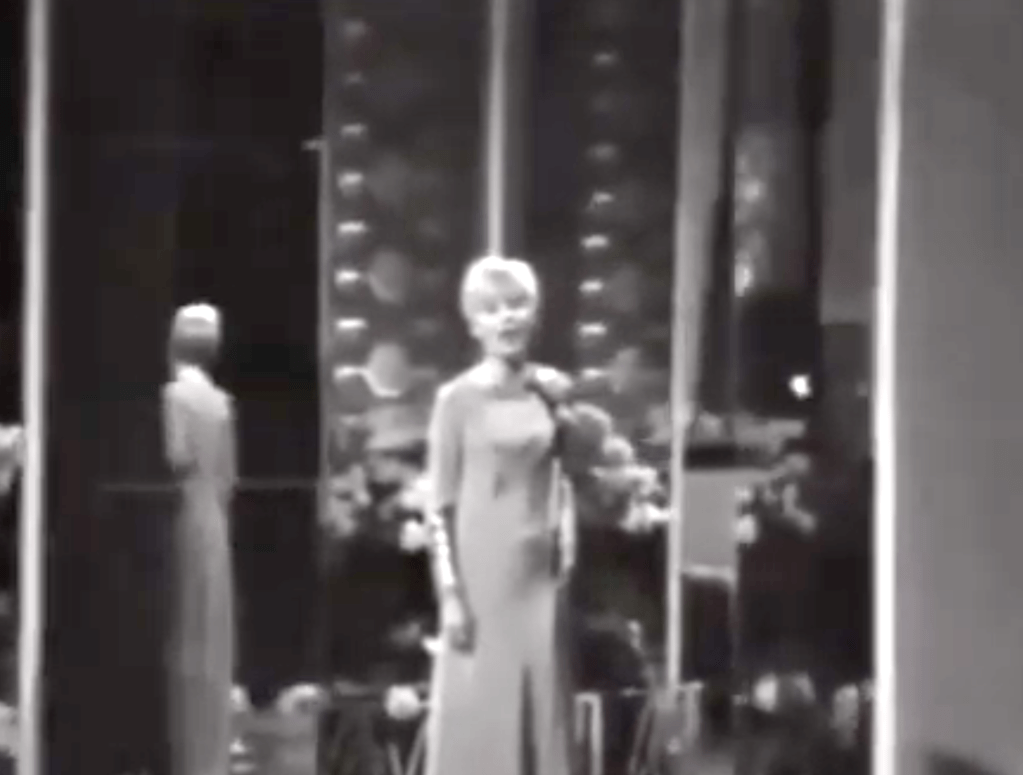
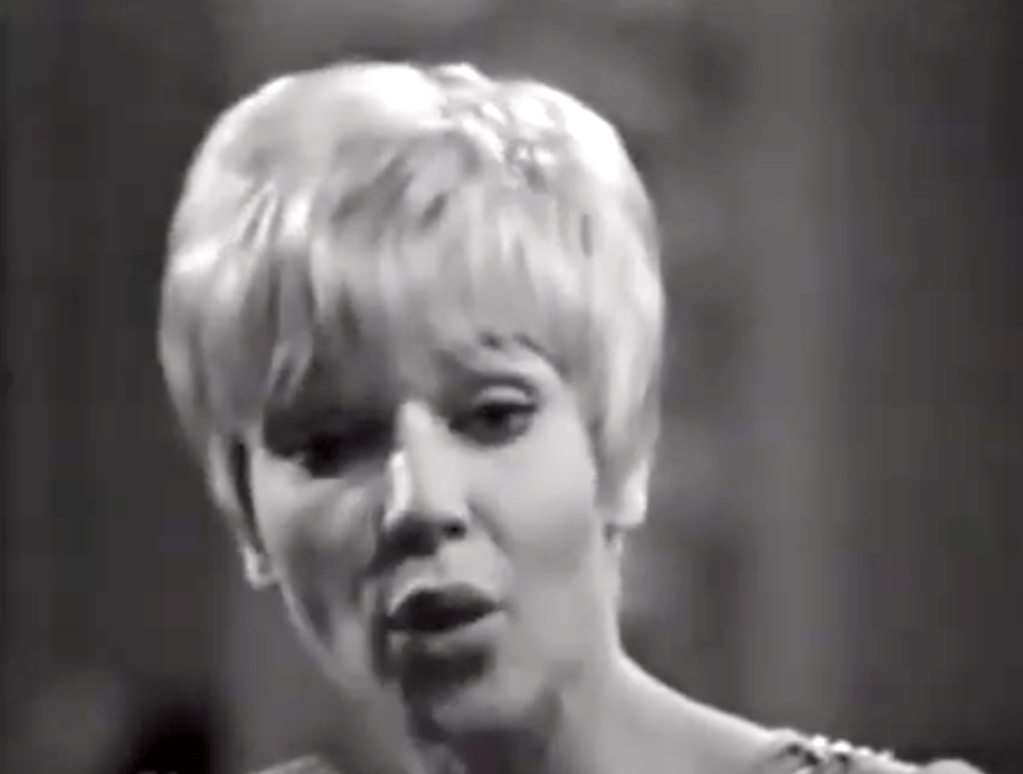
The climax sees Cordier hold long repeated notes (on the phrase “la vie”) while the orchestra builds, before ending suddenly with a final staccato chord; then silence. So much is packed into this expertly constructed, superbly performed song. It’s almost a three-movement structure: the rubato opening, the low-pitched verse, then the high-register refrain, plus a recapitulation of the main themes and a coda.
As with so many of these standout songs, the music and performance offer enough to enjoy without understanding the lyrics. You know there is passion and poise, there is happiness and melancholy, without needing a French-English dictionary to hand. The title translates as “The weather must be good there”, but you really don’t need to know anything else: your imagination takes care of the rest.
The revolving mirrors that were the centre-piece of the set for this year’s contest really add to her performance. Watching the footage, it’s remarkable to reflect that Cordier had only just begun her professional singing career. She times her camerawork brilliantly, appears totally confident and doesn’t get a note wrong. Sadly, she had the misfortune to be up against Sandie Shaw, who arrived at the contest with a song, a stage name and a gimmick, all of which were precision-made for victory. In any other year Cordier might have won. Instead she finished in third place, close behind runners-up Ireland, but both washed far out to sea from the shoeless sandy shore of the winner.
Marianne – Sergio Endrigo (Italy, 1968)
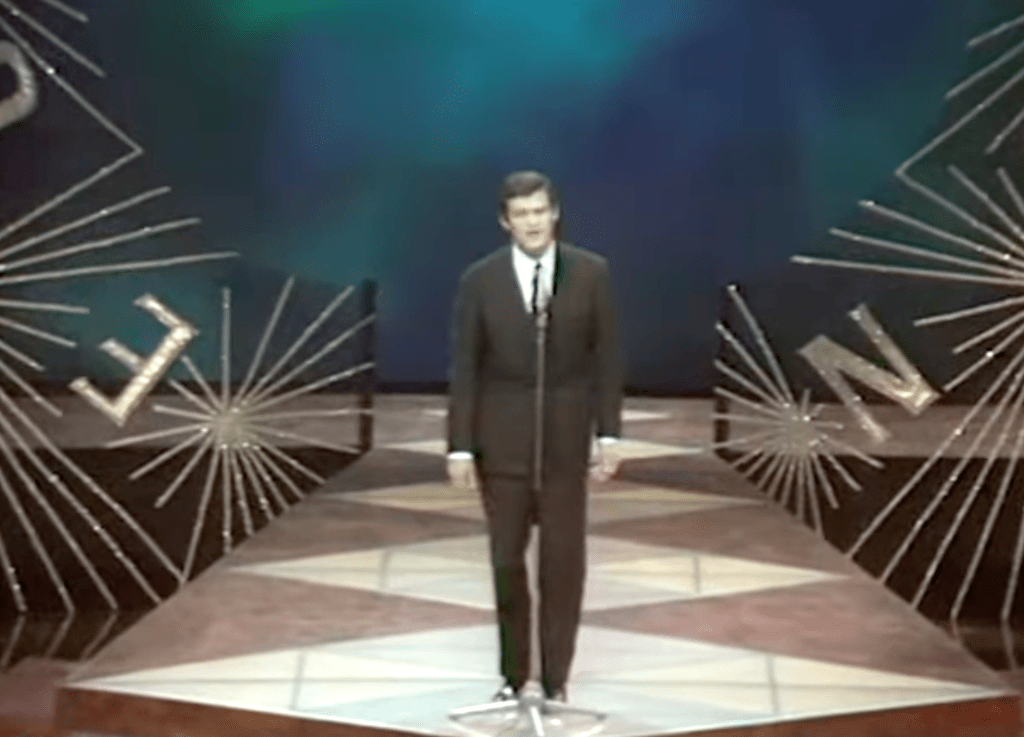
Here is the most beautiful song to appear in any contest of the 1950s and 60s – and quite possibly the most beautiful song ever performed in Eurovision’s history to date.
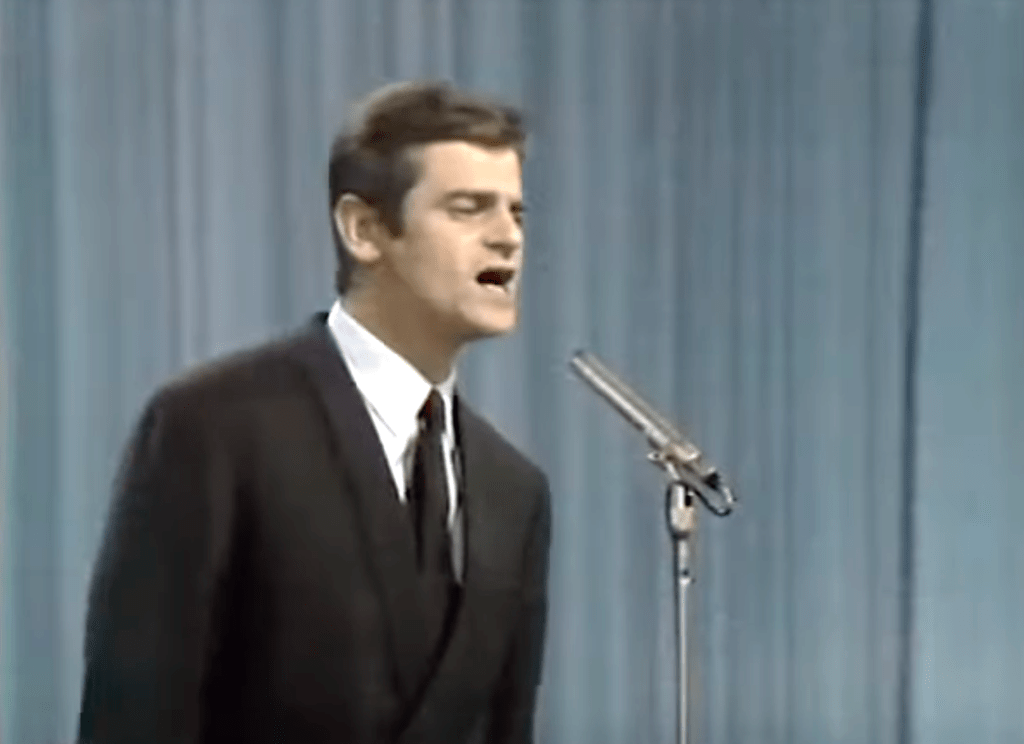
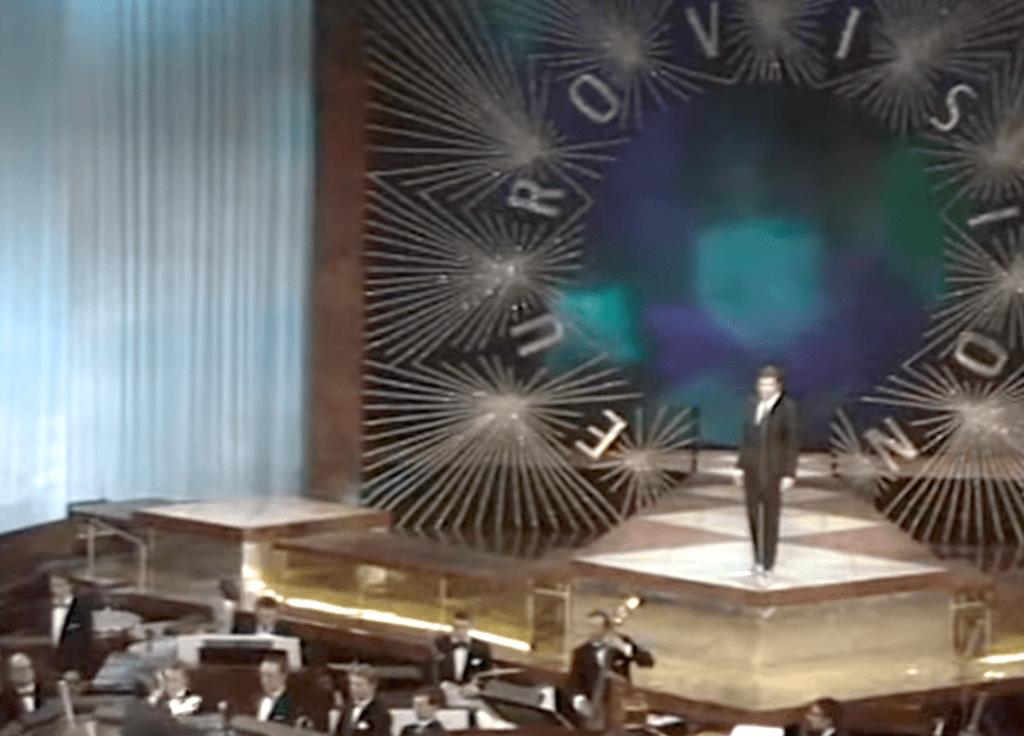
Sergio Endrigo was already one of Italy’s foremost singer-songwriters when he came up with this superlative up-tempo ballad: self-penned, meticulously constructed, richly melodic and thoroughly gorgeous. His performance is a masterclass in restraint: somehow the song is more moving because he is holding something back and because he chooses to control his emotions, rather than bellow in despair or bawl in ecstasy. He has a soulful, mellow voice, fringed with melancholy, that manages to bewitch the listener with the suggestion of heartbreak instead of explicit despair. He is pitch perfect, singing with an easy grace and natural flair. And the notes he sings – of his own composition, to his own words – have that knack of feeling fresh yet familiar at the same time. The tune is his own, yet it sounds as if it already belongs to the world.
The song begins with a steady rhythmic beat on an acoustic guitar and bongo – pam, pam-pam-pam, pam-pam-pam – that sets the brisk tempo but which pulses softly throughout the piece, while other instruments swell and subside above. There are occasional flourishes on a second guitar, which nudges the song further towards the realm of a Latin serenade (not that it needs much nudging, given the distinctive timbre of the singer). Endrigo’s first words are the title, making clear that this is an ode to someone. It could be a plea, a tribute, or a message of some kind, but you don’t need to know Italian to get the gist. He returns to the woman’s name at the end of each chorus, as if he can’t shake his obsession, making it almost a punctuation mark in the song. Marianne is both the first and last word he utters.
The song has a simple structure – chorus, middle section, chorus again, instrumental section (the chorus), middle section again, chorus again – with a beat that motors along and a linear melody with which it is a delight to sing along. The music never strays too far from the tonic, but there is a ravishing key change ahead of the instrumental section that injects the song with an added burst of beauty, modulating smoothly up a semitone from G major to A flat major via an E flat seventh.
The orchestral arrangement is sublime – such soaring strings, and how nice to hear a mandolin in a Eurovision entry – and whoever scored the song had a real ear for answering Endrigo’s phrases with musical replies, whether on the guitar or violins or, later, a solo horn. A glance at a translation of the lyrics reveals that Endrigo paired his most imploring melodic lines with similar entreaties in words (“Dove vai?” – “Where are you going?”) and his softer lines with more searching thoughts (“Mi fai felice per un attimo, poi non vivo piu” – “You make me happy for a moment, then I don’t live anymore”). But while the song resolves itself neatly, one last time, with a rallentando on its tonic chord, the lyrics do not provide resolution and he ends by simply repeating the woman’s name, resigned if not reconciled.
Did Endrigo do himself out of a win by choosing to perform in a very understated way? The footage shows him barely moving while in front of the microphone. In a deeply regrettable outcome (again), Endrigo finished the contest in 10th place out of 17. It can’t have helped that the act on stage immediately after him was Cliff Richard, who belted out Congratulations while sporting an enormous comedy ruff and kicking his gangly legs in time to the beat. What a contrast to the dignified restraint of Endrigo – who could take comfort, should he have so desired, from bookies’ favourite Richard subsequently being pipped to the prize by Spain.
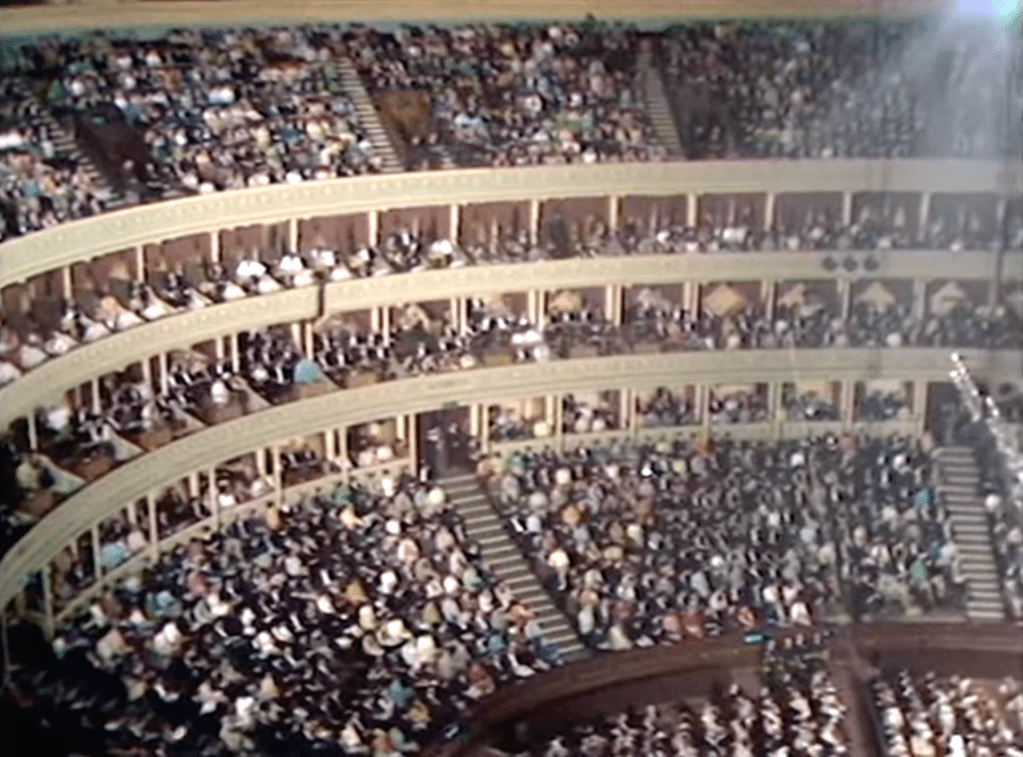
The audience for the 1968 Eurovision Song Contest at the Royal Albert Hall, London
Endrigo probably can’t have taken much comfort from Richard recording his own version of Marianne only a few months later, with bland English lyrics by actor (and future Compo) Bill Owen, in a rendition that ditched all the poise and control of the original. Missing out on Eurovision glory doesn’t seem to have harmed Endrigo’s career in Italy, however, as a string of albums followed, right through to the 1990s.
Bonjour Bonjour – Paola del Medico (Switzerland, 1969)

This is as close as Eurovision came in its early years to unashamed razzle-dazzle, but – to paraphrase Gordon Brown – it’s razzle-dazzle with a purpose. Everything in this song is there for a reason, and that reason is to entertain. It’s there in the brass fanfare that calls you to attention at the start; the foundational oom-pah marching rhythm that propels things forwards; the let’s-slow-it-down-then-speed-it-up-again section, conjuring visions of a phalanx of dancers high-kicking their way down an enormous staircase; the nifty lyric switch from “bonjour bonjour” to “bon soir, bon soir” near the end; and the spine-tingling octave leap in the melody on the song’s final syllable.
None of this is done flippantly. It’s performed with utmost sincerity and conviction, which is why it works so well. There is effort required when delivering seemingly effortless entertainment. It’s a craft. Everyone here is using their skills to the utmost of their ability: musicians, arranger, conductor, singer. Paola del Medico looks and sounds as if she’s having the time of her life, but there’s skill in that too, particularly when there’s a risk of looking and sounding smug or self-indulgent. She is neither. Her pitch is spot on and her performance is just the right balance of theatricality and nuance.
Like Margot Hielscher 12 years earlier, she knows when to go big and when to rein things in. She tones it down for the verses (“Bonjour, bonjour…”), as her melody line skips over a descending chord sequence that resolves satisfactory on the tonic. She then dials it up for the chorus, with long sustained notes at top of her range. The way she sings “wunderbar” is, of course, wonderful.
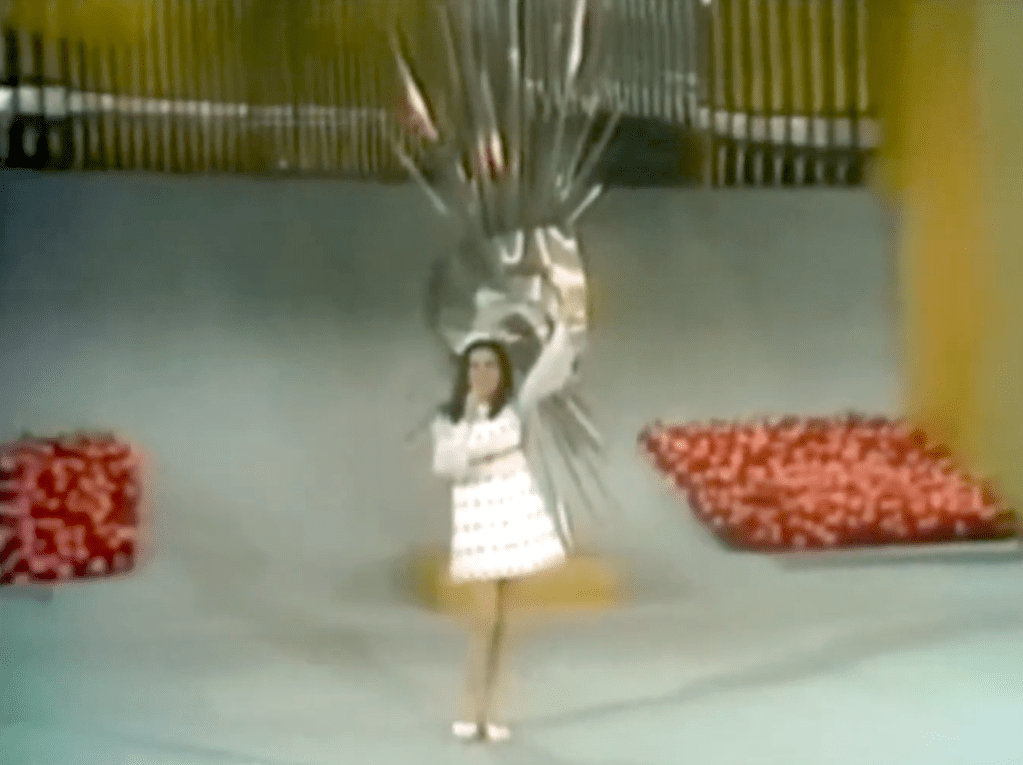
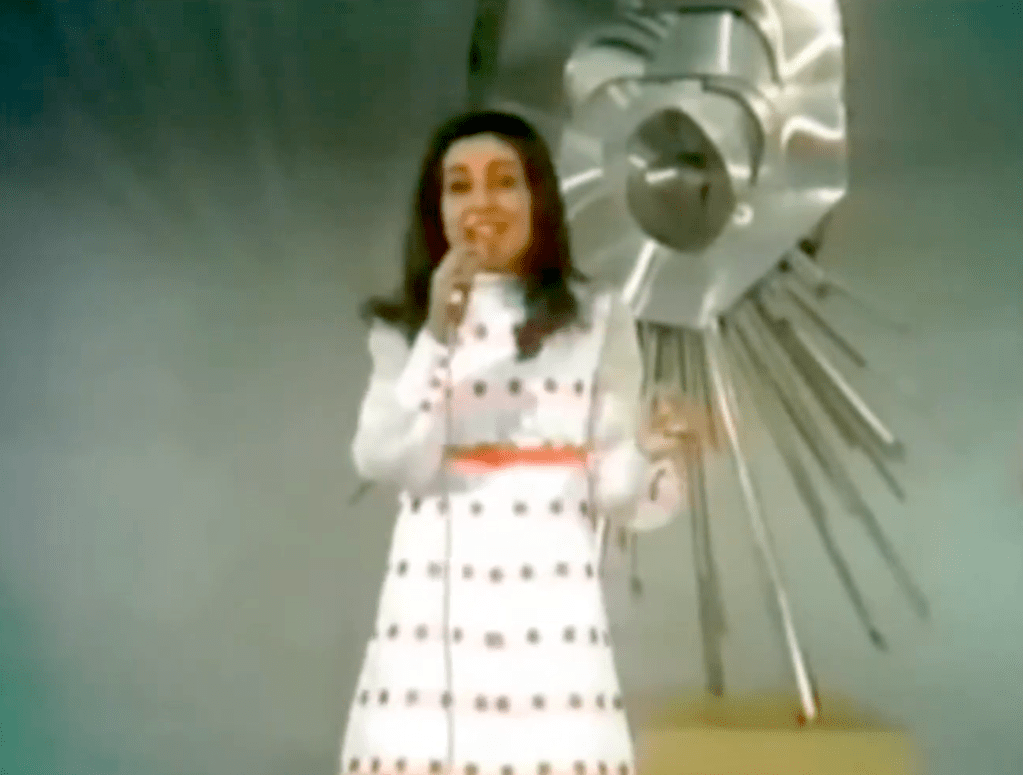
It’s the most joyous song of the decade, and that’s even without understanding most of the words, which on inspection turn out to be a fulsome praise of the virtues of being in love and being seen to be in love.
Del Medico finished in a respectable fifth place out of 16 entries, but as on so many occasions in the history of the contest, a song of quality was beaten by ones with very little to commend them, which in this instance were all four of the joint winners.
In terms of votes, she actually came second with 13, while the four winners each got 18. Spare a thought for the audience at the venue who, after the winners were announced, had to then sit through a repeat performance by all four victors, including – sorry Lulu – the execrable Boom Bang-a-Bang.
Del Medico was only 18 when she appeared in the contest. She had another go in 1980, again representing Switzerland and again missing out, this time finishing fourth with a jaunty ode called Cinema: not as exhilarating as Bonjour Bonjour, but delivered with the same enthusiasm and the same utterly sincere devotion to her craft.

