In the absence of actual rain for much of the spring and summer of 2026, those missing the reassuring pall of dark skies and steady drizzle had to rely on the next best thing: pretend rain.
Not everything did the trick. Watching rain on films or television programmes just fostered jealously (at seeing other people get to experience what you could not) and unease (at the thought of never getting to experience it yourself again).
Hearing it, however, had the opposite effect. The sound of rain is something with which you can engage on your own terms. It enables you to imagine yourself in all sorts of appealingly damp and temperate situations, for as long or a short a period as you like. You can let your mind evoke as much or as little context for the downpour as you wish. Best of all, you can do this while closing your eyes, in the process banishing all risk of glimpsing the parched landscapes and punishing brightness of the real world.
A plentiful source of the sound of rain, a source in no danger of drying up, is pop music. Sound effects of falling rain have been used on pop records for decades. Most people will own at least one or two of these songs, such is the range of artists that have pepped up – or washed down – their efforts with a squall or two.
What follows isn’t a catalogue of them all, nor some kind of authoritative guide to the best. Rather it’s a selection of songs, under whose aural umbrella many of us will have sheltered at one time or another, and which spans both thunderous successes and damp squibs.
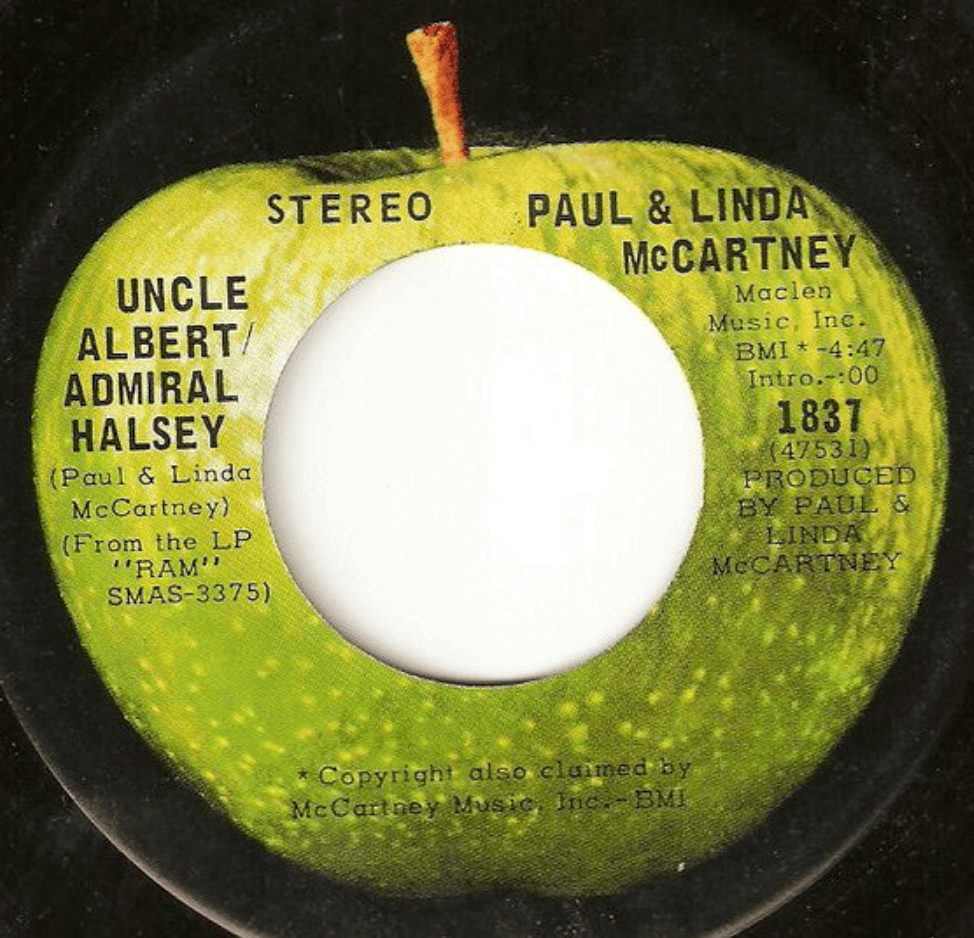
Perhaps the most commercially successful example from mainstream pop, albeit rarely heard nowadays, is Uncle Albert/Admiral Halsey, the baggy centrepiece of side one of Paul & Linda McCartney’s 1971 album Ram.
“There’s no one left at home and I believe I’m gonna rain,” McCartney trills at the end of the first verse, wilfully muddling his understanding of meteorology, followed immediately by 19 seconds of downpour. The rain falls during an instrumental passage in which nothing much happens save for an electric guitar playing a few idle arpeggios, so at least the sound effects help keep you interested, not to say curious as to just what is going on.
Answers come there none, as the torrent turns to a dribble with the return of more deliberately nonsensical vocals, then stops altogether at the arrival of a typically elegant orchestration by George Martin. The rain doesn’t appear again, but then neither does any mention of rain, or being left at home. It’s just one in a sequence of unconnected whims deployed by McCartney to prolong the aural spectacle for as long as he can. The rain starts, evokes a melancholy mood for a short while, then stops.
It’s also McCartney at his most literal: the lyrics mention rain, so let’s hear some rain for a bit. This side of the man was kept largely in check during the Beatles years, but less so in the 1970s and early 80s. (The jury is directed to a. the French cafe hubbub in Picasso’s Last Words; b. the door-bell and creaking hinges in Let ‘Em In; c. the tug of war at the start of Tug of War; and so on.)
The rain in Uncle Albert/Admiral Halsey is nonetheless one of the more successful of McCartney’s soon-to-be-regular forays into sound effects. It thickens the texture of the music at a point where it threatens to turn wafer-thin, and gives the track a grandiose atmosphere that makes it feel more substantial than it actually is. The novelty and the swagger of the song was enough to send it to the top of the US charts.
Rain turns up a few times in Beatles lyrics (the “pouring rain” from which the fireman rushes; the rain that makes people “run and hide their heads”; the hole “where the rain gets in”; the wild and windy night “the rain washed away”). It never appears as a sound effect, however. Perhaps this was too obvious a device even for an otherwise indulgent George Martin.
The folk group Gryphon put this right in 1975, when they used the sound of falling rain to join together two songs on their album Raindance: the title track and a cover of Mother Nature’s Son. The rain plays almost continuously through the former – an instrumental – but is treated as an integral part of the arrangement, sometimes subtle in the mix, other times in the foreground, then building to a climax with claps of thunder. As the track ends and the music fades, the rain eases and the first notes of Mother Nature’s Son are heard. It’s very tastefully done. The effect is to leave you becalmed and in a suitably restful mood for what follows, which is one of those rare examples of a Beatles cover version that is better than the original.
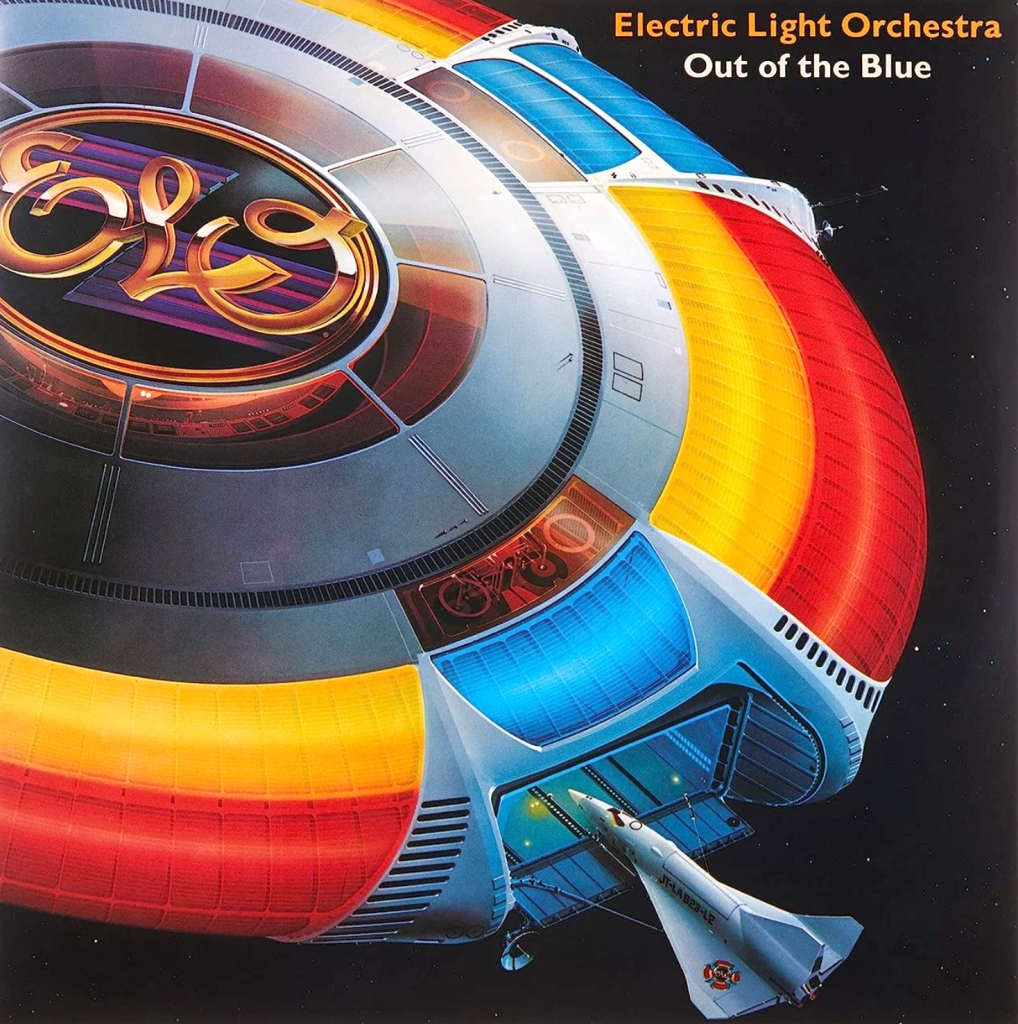
Taste is the key word here. Gryphon have it. The Electric Light Orchestra do not. Listen to how rain intrudes repeatedly into side three of the band’s 1977 double album Out of the Blue. The entire side is subtitled ‘Concerto for a Rainy Day’, so you have been warned.
Even so, each time the sounds appear, their impact is lessened and their appeal wanes, until they end up predictable and irritating. This could all be deliberate, in order to batter you into such a state of despair that the arrival of the last song in the ‘concerto’, the joyous Mr Blue Sky, is meant to feel like your head suddenly clearing of a stinking cold. Then again, this is ELO, a group whose appreciation of qualities such as nuance and sensitivity pales beside their desire to make as much of a racket as possible. Whenever the rain appears on this album, it is at full blast; no light drizzle for Jeff Lynne. In fact, there’s no restraint at all – but again, this is ELO. If you want restraint, you need to walk your galoshes somewhere else.
That somewhere wasn’t too far away in 1977. Gilbert O’Sullivan’s album of that year, Southpaw, ends with the song Miss My Love Today. It’s a subdued reflection on a failed relationship, set to a mid-tempo metronome beat that ticks remorselessly, suggesting an image of someone unable to settle and who is forever moping and brooding. But O’Sullivan is painfully self-aware – the cruellest kind of self-awareness – that moping and brooding is not going to solve anything. “Sitting here alone’s not right, but what else can I do?” he sighs.
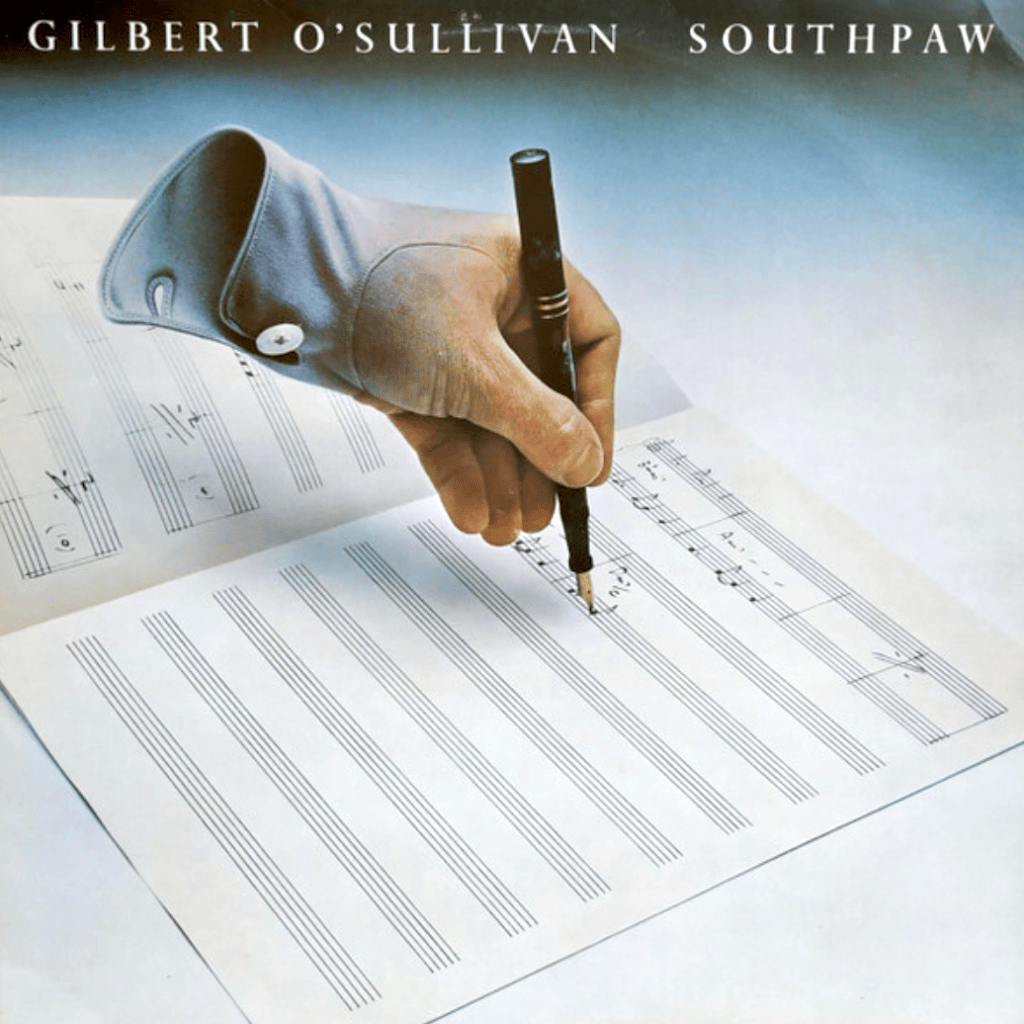
Towards the end of the song, the sound of rain fades up and the rest of the track fades out, leaving just a steady pitter-pattering. This isn’t ELO rain, however. It’s a gentle, consoling rain, backed by a soft, eerie wind, both of which fade to silence after 20 seconds.
These are the last sounds you hear when listening to the song (indeed, the last sounds on the entire album), so besides contributing to the atmosphere of the track, the rain also acts as an aural full stop. A grim one, admittedly, but a strong one – though not something for which the listener has been prepared. O’Sullivan doesn’t mention rain anywhere in the lyrics. The heavens open unexpectedly. Poor Gilbert: as if he hasn’t suffered enough. Yet it feels somehow appropriate, as if it’s bound to start raining on our woebegone hero. It completes the song.
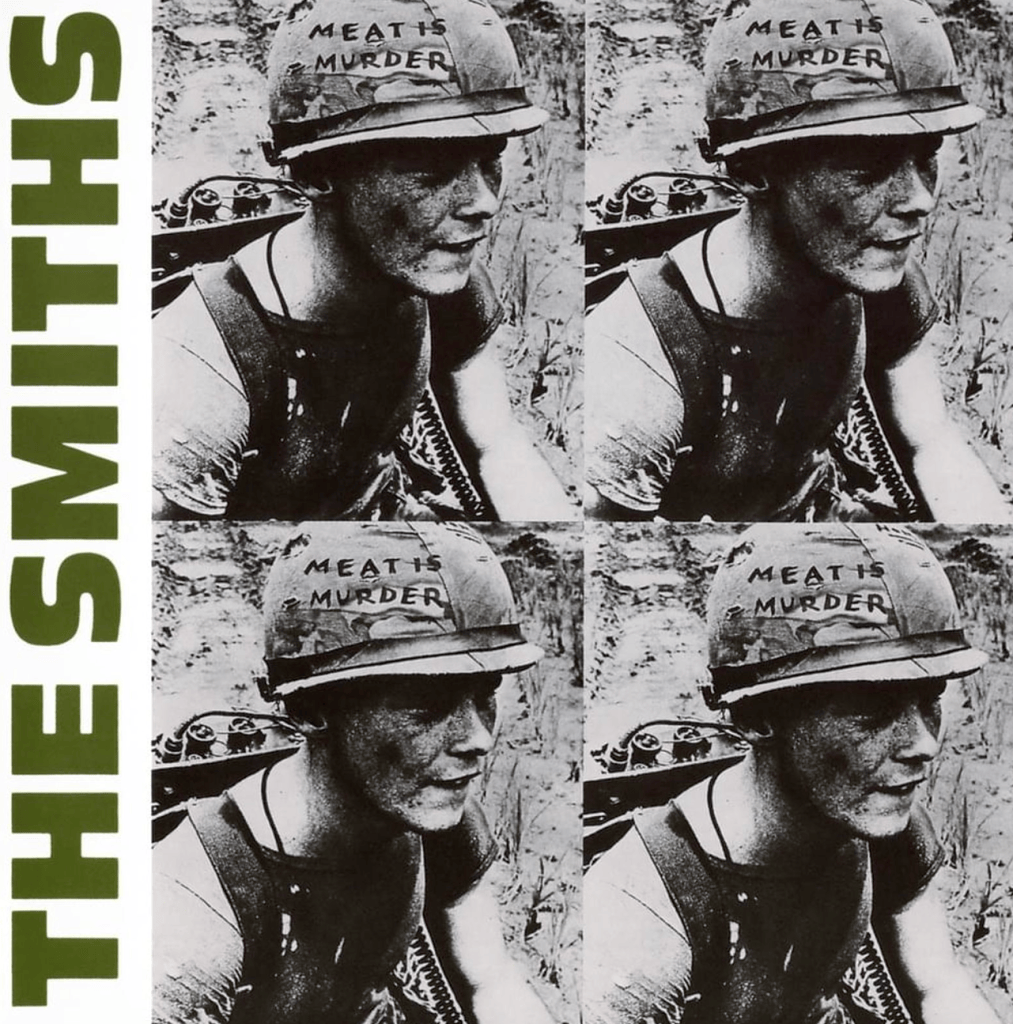
The same is true of Well I Wonder, on the Smiths’ 1984 album Meat is Murder. Again, the song isn’t about rain, but the rain that garlands the final 60 seconds of the track feels an essential part of the composition. Without it, the song would be incomplete.
“Please, keep me in mind,” Morrissey implores, before the heavens open (no manners, but what a critic). Reprising the strategy of O’Sullivan, Johnny Marr fades up the rain towards the end of the final instrumental section, then fades down the music to leave only the sound of falling water. The effect is striking. Never mind meat; this kind of downpour must be murder for Morrissey’s hair.
Used this way, the rain is almost an instrument in itself. It has its own melodic voice, which provides a counterpoint to the rest of the instruments on the recording. And as with the Gilbert O’Sullivan track, it doesn’t arrive until all the singing is over. To do otherwise would create a clash of voices, human versus acquatic, competing for our attention. The rain enters only once the vocalist has exited the stage, pursued by a black cloud.
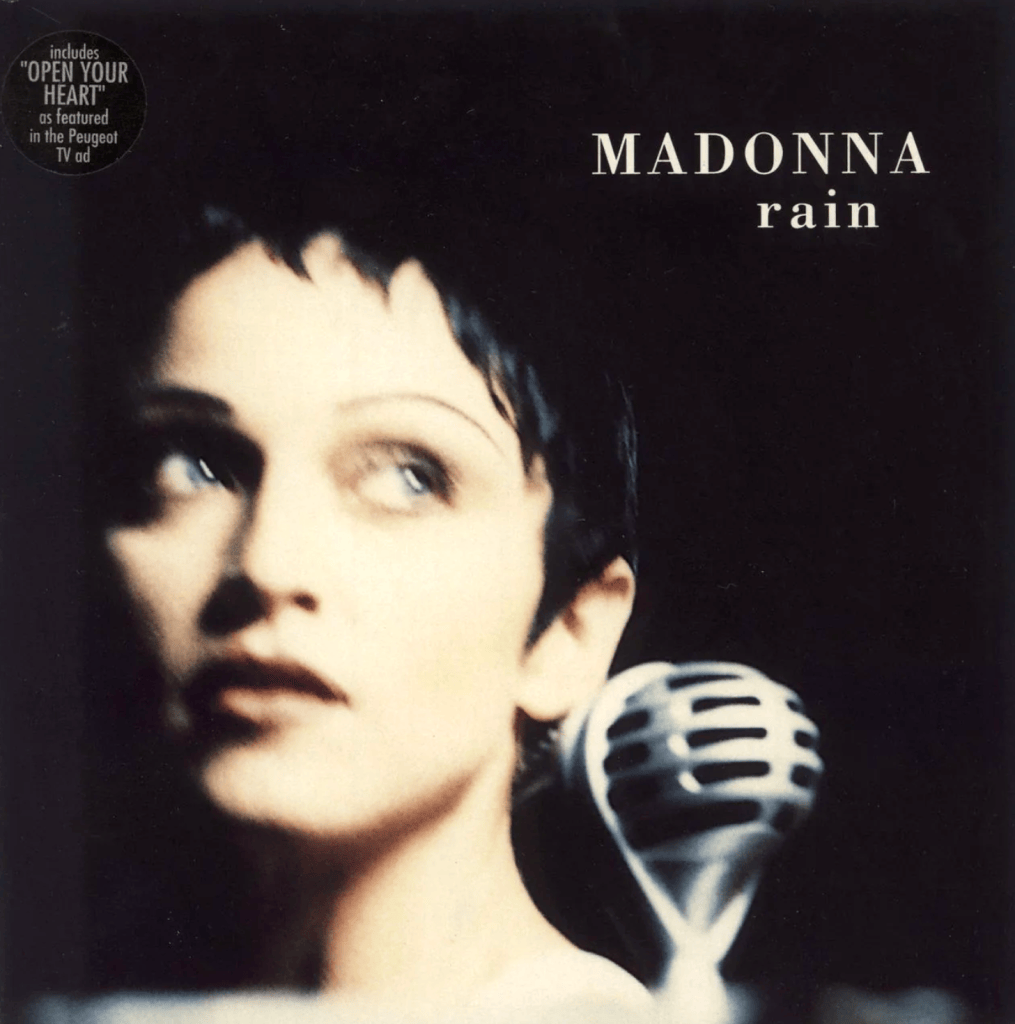
Madonna did the same thing on her 1992 album Erotica, except here the song in question is actually about rain. It’s also called Rain, and mentions rain 18 times. It’s no surprise, therefore, that once Madonna has uttered her final cry of “Rain!”, a sound effect turns up.
The rain drizzles in restrained fashion for a few seconds before ebbing away. It’s pretty much the only restrained thing on Erotica, which makes it a welcome if sadly-brief respite from all the how’s-your-father on the rest of the album. But because it comes at the end of a song that’s about rain, in which the substance has been mentioned many times, it somehow doesn’t have as much of an impact as in the other examples. It’s too on-the-nose. Yes, on-the nose is part of Madonna’s schtick and you should expect nothing less, but here it’s like being prodded by a pointy-fingered meteorologist who thinks we haven’t been paying attention. It’s rain: do you see? That was me singing about rain and here is the sound of some rain. Listen!
Even more on-the-nose is Blame it on the Weatherman by B*witched, from their self-titled 1998 album. Here the rain turns up at the start of the song, not the end, pattering for 15 seconds before a single note has been heard. There’s a rumble of thunder thrown in for good measure, in case there was any lingering doubt for what the weatherman should be blamed. This seems a bit unfair on the chap; he’s only doing his job. Besides, by the sound of things it’s not a particularly heavy cloudburst.
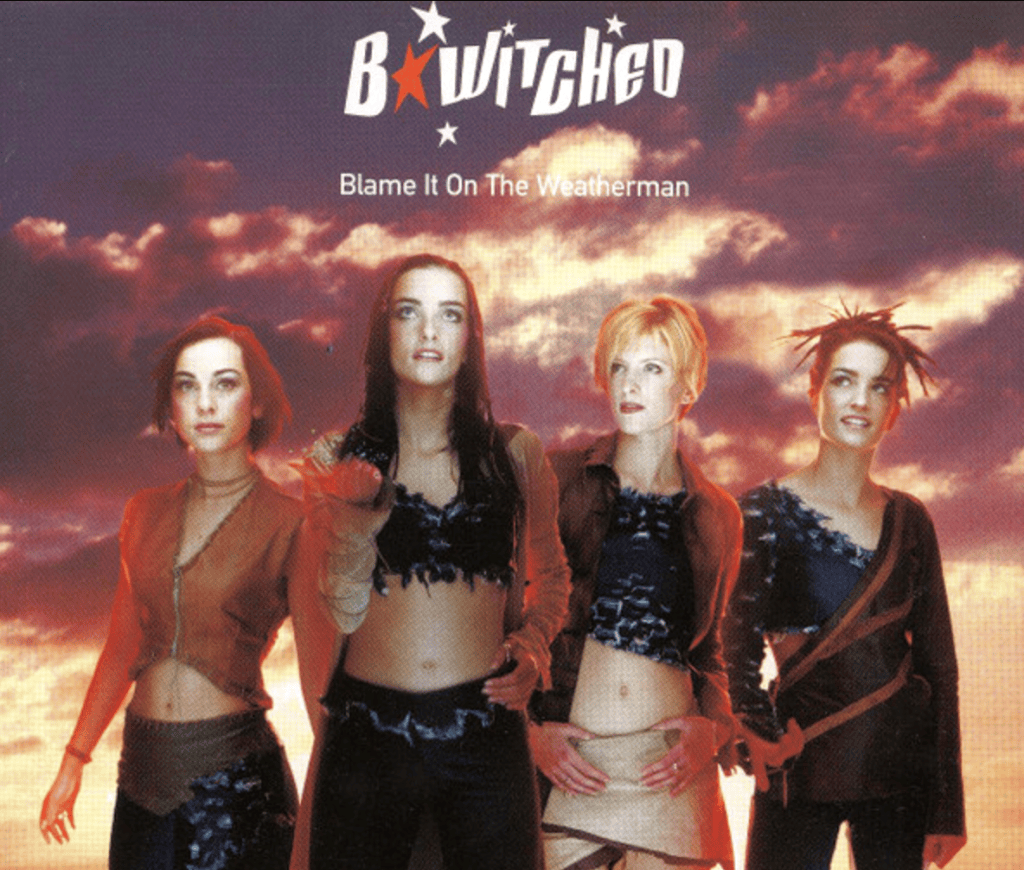
Then it turns out the group aren’t concerned so much by wet stuff coming from the sky as wet stuff flowing from their eyes. It’s a love affair that has fallen through, not their plans for a stroll. The downpour “goes on and on again”, unlike the relationship.
The fact that things haven’t worked out is more likely the fault of Peter Cockroft than B*witched, it seems. As with Madonna’s song, the rain ends up supplying buckets of lyrical imagery that soon overflow. All the mentions of water clog rather than cleanse our pores.
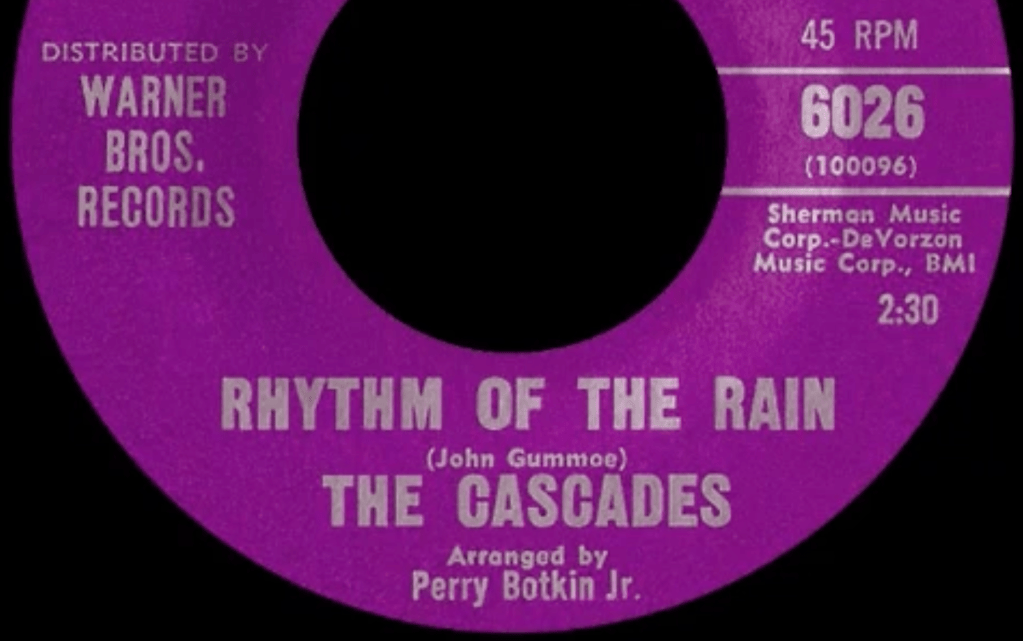
A recording that has sound effects both at the start and at the end but which never once becomes over-saturated is Rhythm of the Rain by the Cascades from 1962. Might this be the earliest recorded pop song to include the sound of rain? It’s certainly one of the most successful attempts to blend figurative rain – both lyrically and musically – with a literal downpour (twice!).
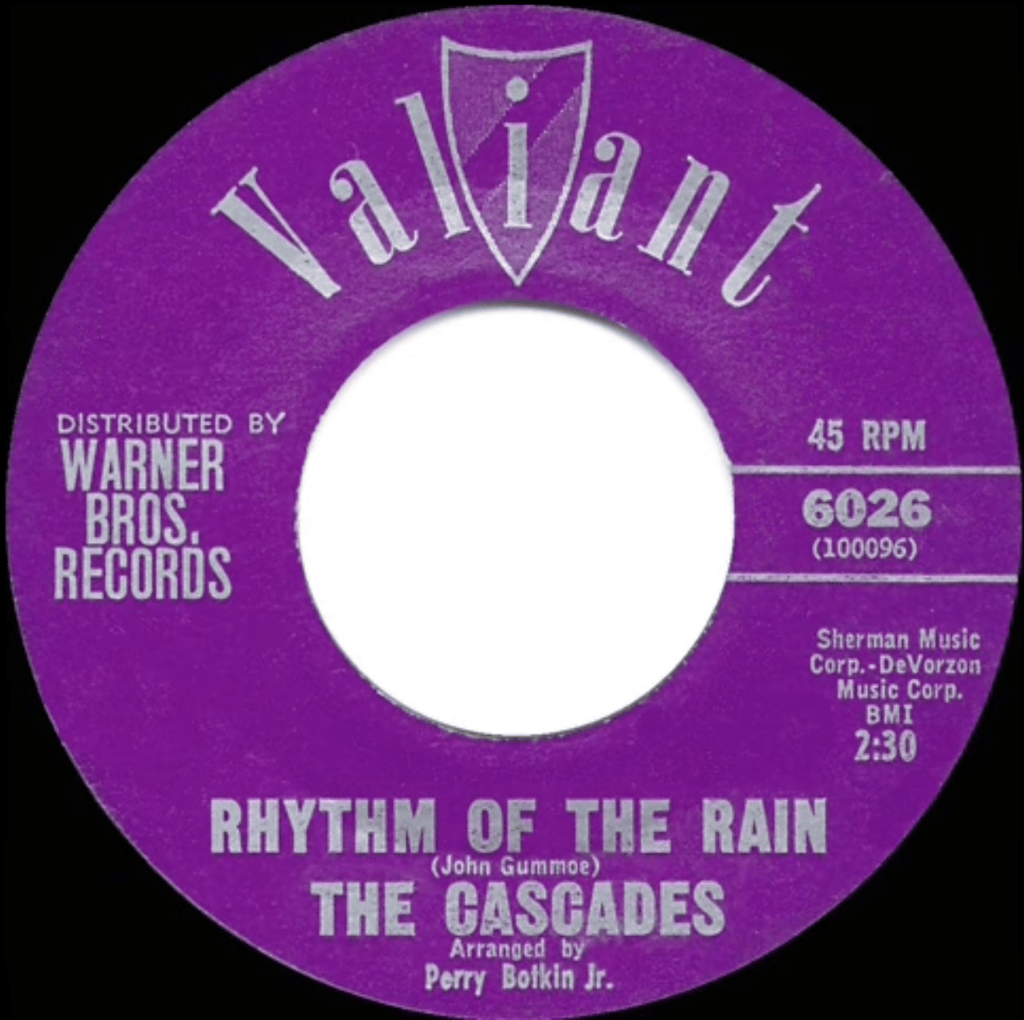
After a clap of thunder and a few seconds of precipitation, vocalist John Gummoe invites us to “Listen to the rhythm of the falling rain.” He’s been listening too, and while its pitter-pattering might sound consoling to us, to him it’s reproachful, telling him “just what a fool I’ve been.”
As the song continues, he strikes up a conversation with the rain, alternately beseeching it (“Won’t you tell her that I love her so?”) and shunning it (“Let me be alone again”). It does neither, of course. It just carries on, and when the song ends, it is falling to the same rhythm as it did at the start. Gummoe concludes as he began, asking us again to “listen”.
It’s a richly elegiac song with a beautiful arrangement, full of details that develop the theme of the title. The melody of the chorus is built around a sequence of falling phrases that climb down the musical scale as methodically as water flowing down a flight of steps. A celesta is used throughout, its delicate flourishes evoking droplets of rain plopping gently in a puddle or on a window pane, while a swampy-sounding Hammond organ joins the celesta in the instrumental break for a unison recap of the tune. Few songs manage to create and sustain a watery soundscape as persuasively as this.
The song was a top five hit in both the US and the UK and cover versions soon followed, with Sylvie Vartan releasing a French recording in 1963, En ecoutant la pluie. The arrangement is almost identical to that of the Cascades, including celesta, organ and sound effects, and what non-French-speaking listeners lose in understanding is almost made up for by the appealingly plaintive (and appropriately soggy) tones of Vartan’s voice.
Gary Lewis (son of Jerry) had a modest hit with the song in 1969, omitting the sound effects but reproducing most of the Cascades’ version note for note. The result is pleasing but not memorable. Then Neil Sedaka had a go in 1984, junking the sound effects along with most of the song’s melody and all of its charm. The result is dreadful.
Jason Donovan’s 1990 version not only restores the sound effects but also ratchets them several notches up the Beaufort scale. An enormous clap of thunder is followed by more of a tropical storm than falling rain. The Stock/Aitken/Waterman production does him and the song no favours, replacing nuance with novelties like a keyboard riff that sounds like someone doing piano practice and a choir of backing singers blasting out block harmonies (“Ahhhhhhh – falling rain!”). The flash floods don’t return at the end, which is a shame as they would have relieved the tedium of hearing yet another chorus. The version Donovan recorded for his 2008 album Let it Be Me is far better, by virtue of being an understated homage to the 1960s (complete with celesta).
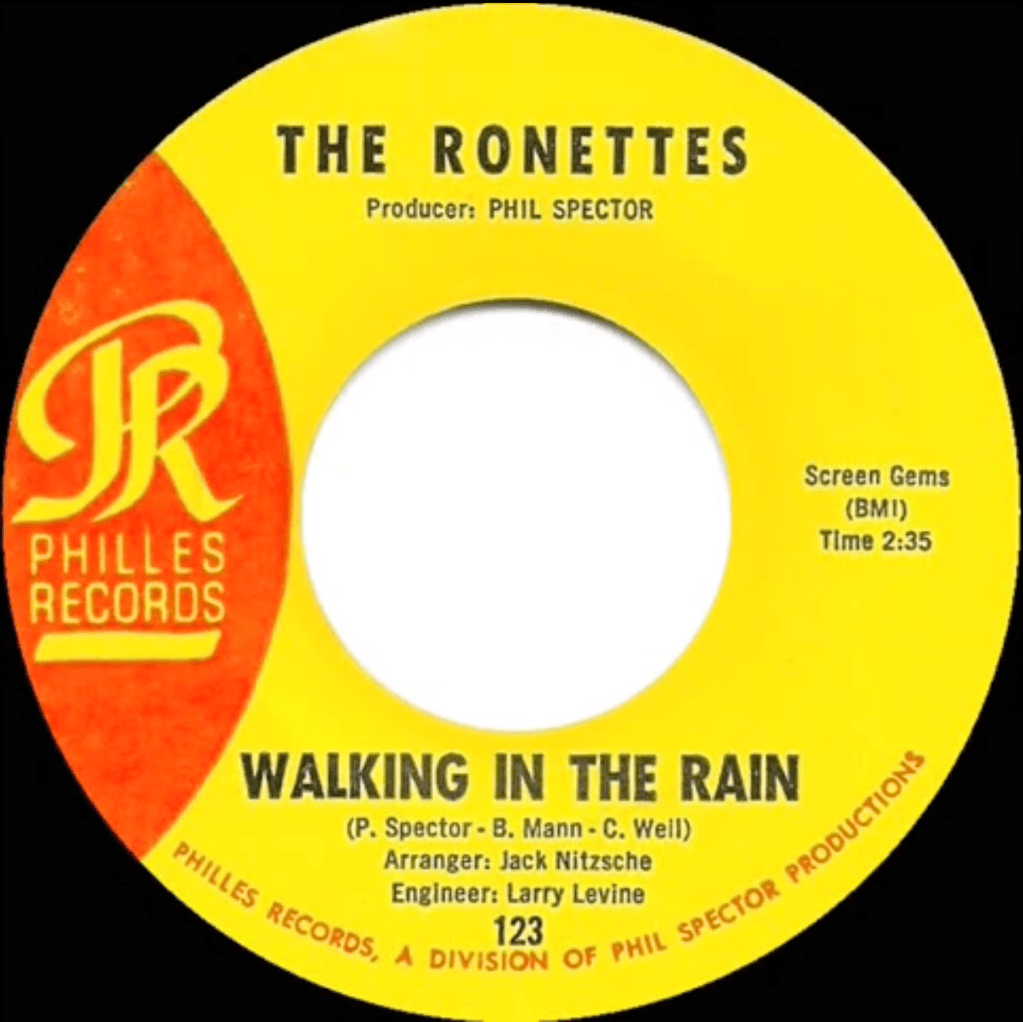
Two years after the Cascades topped and tailed their record with the sound of thunder and drizzle, Phil Spector did the same thing on the Ronettes’ Walking in the Rain. But Spector being Spector, cavernous reverb and echo are slapped over everything, including the effects.
This means whenever thunder intrudes on the track, which it does throughout, poor Veronica Bennett (as she then was) is almost drowned out by the rumblings. The relentless four-in-a-bar beat suggests Ronnie isn’t so much imagining walking in the rain as stomping, while some of the instruments used by arranger Jack Nitzsche – a xylophone, tubular bells – make it sound almost Christmassy. There’s just too much going on here. The music, lyrics and effects all battle to be heard and end up swishing around in a muddy puddle of noise. While Ronnie’s intentions are spot on (who wouldn’t want to be with someone who likes walking in the rain?) those of Phil Spector are not.
The Weather Girls’ 1983 disco tribute to gravity-endorsing Icaruses, It’s Raining Men, suffers the same problems: sound effects that can’t be heard clearly, an exhausting arrangement, an overload of instruments and a poor production mix. But this song isn’t really meant to be listened to: it’s an accompaniment for dancing and an excuse for shouting (“Hallelujah!”), so criticism of this nature is perhaps unfair.
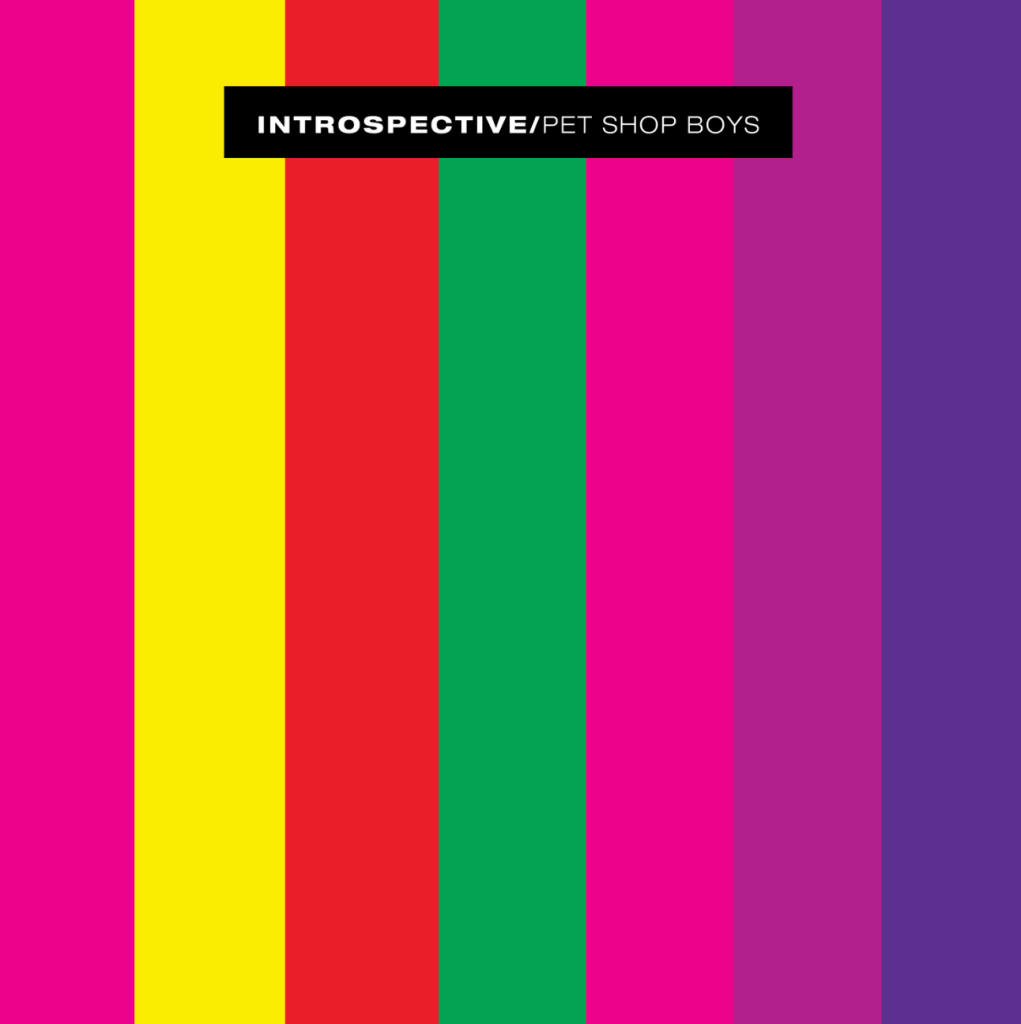
One of the best-timed and most intelligently deployed downpours in pop comes neither at the start nor the end of a song, but between tracks. It’s on Pet Shop Boys’ Introspective album, and appears between track one, Left To My Own Devices, and track two, I Want a Dog.
It is one of the best and most intelligent for three reasons. First, because it is on a record by Pet Shop Boys; second, for the way in which it is used; and third, for the songs between which it is appears. Left To My Own Devices concludes with one of the most exhilarating musical full stops committed to disc. The song builds to such an eruptive climax, with vocals, orchestra and sequencers all at full throttle, that there is no question of the next track beginning right away. How could anything follow it immediately? Something non-musical needs to happen in order to cleanse the aural palate.
Cue a huge clap of thunder and a torrent of rain: the ideal sonic reset. The rain then fades into track two, I Want A Dog, a song of a totally different mood and scope to Left To My Own Devices, but in its own way just as thrilling. Both tracks end up enhanced, not diminished, by the way they are sequenced either side of that brief downpour, which acts as necessary interlude for listeners to syringe out their senses.
All of the songs mentioned above contain the sound of rain – or rather, the sound most commonly associated with rain, which could best be described, accurately if rather joylessly, as water falling steadily on to a hard surface. Precisely what type of hard surface produces the most “rain”-like rain is something that must have taxed many an audio engineer and producer in the early decades of the recording industry, along with what volume and intensity of water to use, from what height to release the water, and so on. Some will not have used water at all, opting instead for something that was a bit like the “sound” of rain: grains of rice being dropped on a tin tray, for example, or wobbling a sheet of metal to create a rumble of thunder.
Earlier even than Rhythm of the Rain is a doo-wop version of the Harold Arlen/Ted Koehler torch song Stormy Weather, by the US group the Five Sharps. It was a flop on its release in 1952, and some of the singing is so over-the-top as to be laughable, but the sound effects are quite something.
Given the date, the thunder is more likely to be of the sheet metal kind than your actual sonic shock wave, but there’s no doubt what it’s meant to represent and no question of it passing unnoticed. The sound of rain on the track, whatever its provenance, is close enough to the real thing (or rather, the sound most typically associated with the real thing) to do two jobs: to be a gimmick to catch the attention, and to be a production technique to give the song a unique texture.
A whole division of the recording industry emerged in the second half of the 20th century dedicated to the provision of sound effects, producing discs filled with – among many other things – different sounds of rain: rain falling lightly, rain falling heavily, rain on windows, rain on roofs (tin roofs especially), rain on clothing, rain on water, and so on. But no matter how much choice was on offer, there always remained the challenge of creating a sound effect that most resembled what was commonly understood to be “rain”.
The examples mentioned above all use an effect of rain falling on a type of hard surface. This isn’t that surprising. We spend most of our lives surrounded by hard surfaces and are therefore most likely to “hear” rain when it lands on this kind of substance, which in turn gets logged in our memory as the default “sound” of rain.
But thanks to the age in which we live, shaped both by climate change and the increasing availability of multi-media entertainment, we’re just as likely to encounter the sound of rain in a TV show, film or song as in its organic form outside a window. And so our logged memory of what rain “sounds” like becomes a jumble of the genuine article and its many simulations. In turn, the entertainment industry is faced with a new challenge: coming up with a sound effect for rain that best matches the expectations of an audience who have been exposed to a lifetime of downpours that are as much pretend as real.
It can therefore be a bit jarring, and certainly unexpected, when you hear rain on a pop record that doesn’t behave like you expect it to: when it doesn’t have a consistent tone and intensity, or when it doesn’t sound like it’s falling steadily on a hard surface, and instead alternately plops and plummets on a variety of substances.
This is something that isn’t really possible within a single song, when rain appears only for a period of seconds rather than minutes and there’s not enough time for listeners to hear an appreciable change in precipitation. But there is enough time to do this across an entire album, or a sequence of songs, although this can backfire if it’s not done carefully or tastefully (remember ELO).
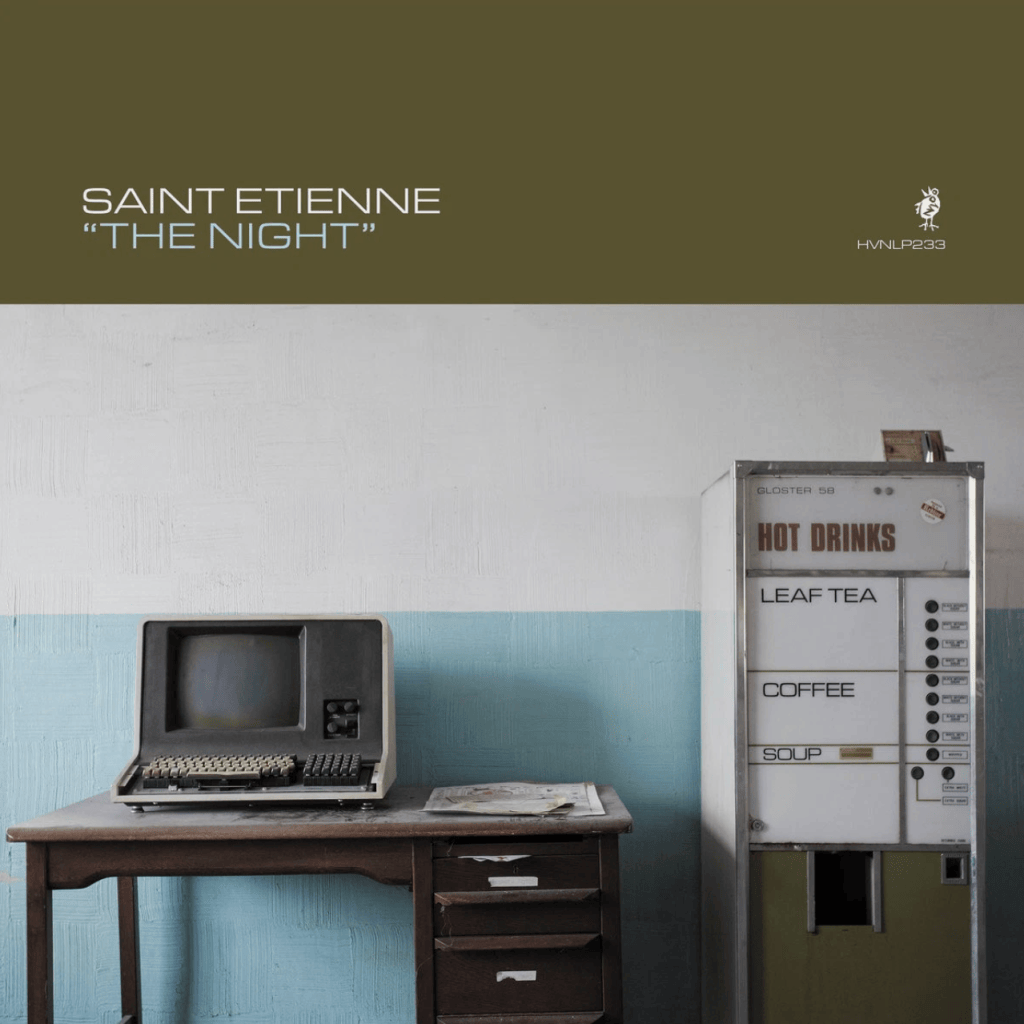
One example of a lengthy, modulating downpour woven with care and taste into a sequence of tracks is Saint Etienne’s 2024 album The Night. Here the rain threads its way through the entire record, sometimes falling steadily, at other times reduced to a trickle.
At points it sounds like it’s landing on hard ground; later it’s pitter-pattering on soft earth. It disappears occasionally, but is never far from returning. It is the first sound on the album and the last. In between come a collection of short songs and instrumentals that share, as the title suggests, a nocturnal quality, full of hushed voices, subdued tones and that sense of being half-awake and half-asleep. The album creates an aural cocoon that, while quite enchanting, also manages to offer consolation. But this shouldn’t come entirely as a surprise, for what is one of the most consoling of sounds? Falling rain.
This wasn’t the first time Saint Etienne had used this type of sound effect. It appears on their 2015 song After the Rain, as well as a 2009 remix of their 1991 song Like the Swallow. But it was definitely their most extensive, and also their most creative. It’s probably one of the most creative uses of rain on any pop album. You’d have to listen to every pop album there is to be sure, but “probably” feels like a safe bet.
These are only a few examples of pop songs using the sound effect of rain. There will be others. There are also others outside pop: the morose Riders on the Storm by the Doors from their 1971 album L.A. Woman, which is positively soaked in the stuff; The Who’s terribly-titled Love, Reign o’er Me from their 1973 album Quadrophenia; and the dance track Set You Free by N-Trance, released (and flogged) several times in the early 1990s.
Rain feels most at home in pop music, however. Pop has a lightness of touch that suits the occasional light shower. The texture of rain seems to blend more comfortably, more pleasingly, with those of pop songs than with genres that tend towards denser arrangements and heavy production. Pop has a knack of clarifying and radiating universal emotions to a degree that no other type of popular music quite manages. It seems only natural, therefore, for pop to open the windows from time to time and let in one of the most universal of experiences: the sound of rain.

